Quick takeaways
- Visit Iran lists kolompeh, qavoot and several agricultural products among Kerman souvenirs.
- Qavoot blends need their own ingredient information.
- Spices should be kept separate from sweets and textiles.
- A mixed box does not give every component the same storage requirements.
Choose roles for the basket before choosing products
A useful assortment has a reason for each component. One item might be ready to share, another an ingredient for someone who cooks, and a third a small treat for a different household. Start with those roles rather than buying one of everything on the counter.
Visit Iran names kolompeh and qavoot among Kerman foods and lists cumin, pistachios, walnuts and dates among regional products. That provides a starting shortlist, not a claim that every pack sold in Kerman has a verified local origin. Ask for product-specific information when origin matters, and avoid turning a broad regional association into a promise about your purchase.
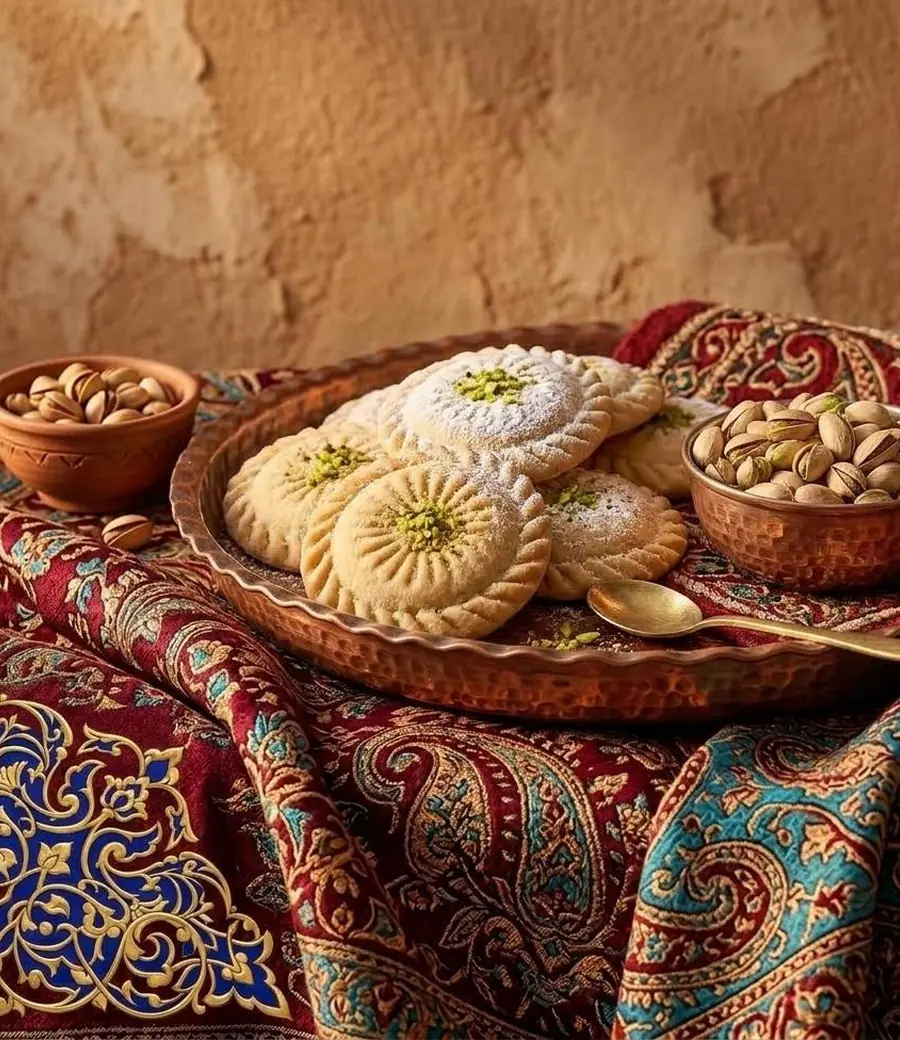
Use kolompeh as a shareable component, with its own space
Kolompeh can serve as the sweet centerpiece of a small gift. Compare the quantity, labeled ingredients, dates and the way the pieces sit inside the box. If the pack has large empty spaces or weak walls, ask how it will prevent movement and crushing during your trip.
Do not place a heavy jar of spices or nuts directly on the sweets. A basket can look coordinated while its components remain in separate protective packs. If the recipient will not open the gift immediately, use the actual storage directions and dates to decide whether the sweet belongs in the assortment at all.
Make qavoot understandable to an unfamiliar recipient
Visit Iran describes qavoot, also known as qowatou, as a powdered local food. A powder is not self-explanatory to someone encountering it for the first time. Choose a clearly identified product and retain the maker’s directions for its intended use rather than inventing a preparation method.
Check the blend’s actual ingredients because the name does not define one universal recipe. For a recipient with dietary restrictions, that information is central. Avoid presenting qavoot as a treatment, strength remedy or guaranteed health food. Its role in the gift can simply be a regional food the recipient is interested in trying.
Give cumin to someone who will use an aromatic ingredient
Cumin may be a compact addition for a person who cooks, but it can be less useful for someone who wants only ready-to-serve sweets. Ask about the product form and the quantity the recipient is likely to use. A small identified pack can be more practical than a large loose purchase with little information.
Keep the spice in secure packaging and add a separate outer barrier where appropriate. Do not allow its aroma to become the scent of every sweet, garment or paper gift in the bag. If the closure is weak or the pack leaks powder, solve that at the shop rather than treating the problem as inevitable during travel.
Let pistachios and dates earn their place separately
Pistachios can suit sharing, while dates may bring a different texture and use to an assortment. Neither name tells you everything about the particular product. Check the stated variety or preparation where relevant, ingredients, pack integrity and storage directions. Compare quantities on the same basis before comparing cost.
Visual appeal alone does not establish all aspects of nut quality or safety, and dates with different characteristics may have different handling needs. Avoid promising that the entire basket can be stored in one way merely because the items are sold together. If a component needs conditions you cannot provide, remove it rather than weakening the plan for all the others.
Build one of three small combinations
For a household that likes shared sweets, start with kolompeh and consider a separate modest pack of pistachios. For a cook, cumin may be the main item with a small sweet alongside it. For someone curious about regional foods, clearly labeled qavoot can be the focus, accompanied by an explanation of the maker’s stated use.
These are planning examples, not fixed formulas. Check dietary requirements and preferences before buying. A component that no one wants is not useful variety. When gifting to several households, complete small packs often preserve identity and simplify division better than a large decorative basket that must be dismantled on arrival.
Pack by physical risk, not by color coordination
Separate aromatic powders, crushable sweets and heavier containers. Keep original food packs closed, use clean outer protection and place weight where it will not bear on fragile items. A pretty basket that will be carried a short distance may be unsuitable for a suitcase or several vehicle changes.
Consider each stage: the walk from the market, waiting at the accommodation, the main journey and the time before gifting. Protect against unsuitable heat, dampness and pressure while following each label. Do not assume one cold or dry storage recommendation fits every component. The assortment must work as separate foods as well as a finished gift.
Compare the finished basket before paying
List the contents and net quantities, then check whether the combined packed size fits the space you have reserved. Compare another basket with the same roles and similar quantities, not just a different decorative box. This guide does not provide current prices or rank individual sellers.
For international travel, verify current requirements for each food category and the actual ingredients. Keeping labels and receipts helps identify the contents but does not guarantee entry. Before handing over the gift, check the packs again and give the recipient their storage and use information. A smaller assortment that arrives clearly identified and intact is preferable to a large one whose components have become mixed, crushed or unexplained.
Frequently asked questions
What belongs in a Kerman food-gift basket?
Choose by recipient: a shareable sweet, an ingredient for a cook or an identified regional food. Kolompeh, qavoot, cumin and pistachios play different roles.
Does every qavoot blend contain the same ingredients?
Do not assume so. Read the specific blend’s ingredient and use information.
Can spices go directly beside sweets?
Keep them independently sealed and protected against powder leakage and aroma transfer.
Can the whole mixed basket follow one storage rule?
Only if the actual instructions are compatible. Check each component independently.
Does a labeled food basket guarantee permission to cross a border?
No. Verify current destination and carrier requirements for all actual contents.
Sources and notes
The date beside a source is its recorded access date, not confirmation that the link works today or that the whole article has just been reviewed. The article’s update date is shown separately.
- Kerman Province — Visit Iran
Recorded source access: - Rayen — Visit Iran
Recorded source access: