Quick takeaways
- Rafsanjan is a major pistachio center in Kerman, but a regional name does not verify every package.
- Shell opening and large size alone do not establish freshness, taste or safety.
- Check aroma and a sample kernel when permitted; reject musty, damp, rancid or unusually bitter notes.
- Aflatoxin control requires professional sampling and laboratory testing, so choose traceable sellers and sealed labeled packs.
Start with recipient, use and travel time
Decide whether the pistachios are for immediate snacking, formal gifting, cooking or a long international journey. That choice changes the useful pack size, roast level, salt level and packaging. A large decorative box can become wasteful if the recipient prefers unsalted nuts or cannot finish it soon after opening.
Ask about nut allergies before choosing pistachios as a gift. Keep edible gifts separate from crafts when the recipient’s dietary needs are unknown, and never describe a product as allergy-safe without reliable labeling and handling information.
Kerman and Rafsanjan provide meaningful geographic context, but purchase location is not proof of orchard, cultivar or processing history. Record the seller, label and stated origin instead of upgrading a general story into certainty.
Read the package before judging the shells
Look for a clean, intact package with product name, net weight, producer or packer, contact or traceability information, production or packing date, best-before guidance, storage directions and ingredients for flavored products. The exact legal format varies, but absence of basic identity makes follow-up difficult.
Inspect the seal and corners for punctures, oil marks, moisture or tampering. Transparent windows help observation but should not replace proper barrier packaging. Ask whether the displayed sample and the sealed box are the same grade and roast.
For a gift, choose labeling the recipient can understand or photograph and translate the essential details. Ornate cardboard cannot compensate for a weak inner bag.
Use aroma as an early freshness screen
When tasting or smelling is permitted, the aroma should be clean and nutty rather than stale, paint-like, damp, moldy or sharply rancid. Roasting and seasoning may change the profile, so compare products of the same style rather than treating a strong spice smell as proof of freshness.
Open one or more sample shells and examine the kernel. Look for a coherent color and texture, not excessive shriveling, dark damaged areas, insect evidence or unusual powder. A naturally varied batch can still be acceptable; the concern is a repeated off-condition.
Taste a small sample only from a hygienic service. A fresh kernel should not leave a persistent rancid or abnormal bitterness. Flavor preference is personal, but an off-note should not be dismissed because the shells look large.
Do not rank quality by open shells and size alone
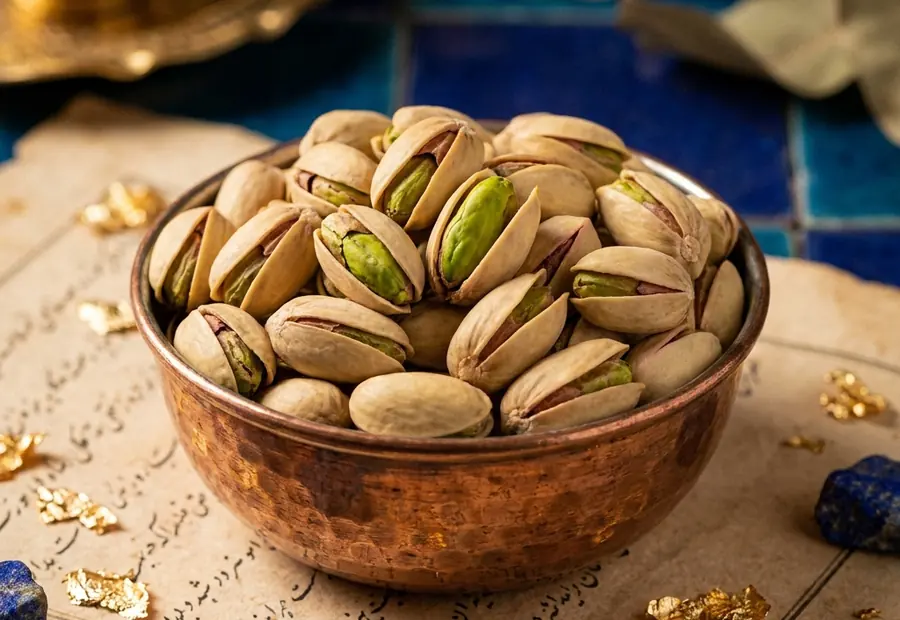
Naturally open shells are convenient, yet shell opening does not by itself prove flavor, harvest date or safety. Large nuts are visually impressive, but smaller kernels may suit cooking or a modest gift. Compare usable kernel, condition and price per stated weight.
Look at uniformity within the chosen grade: extreme mixtures of shell size, roast color and broken kernels can make the box feel inconsistent. Still, perfect cosmetic uniformity is not a substitute for freshness or documentation.
Ask the seller to explain grade terms rather than assuming they have one universal meaning. Record the exact description on the receipt when it materially affects price.
Treat safety claims with laboratory-level caution
FAO material on Iran’s pistachio sector highlights contaminant testing, including aflatoxin control, as a technical issue. A buyer cannot verify invisible contamination reliably from shell color, water tests, floating behavior or a quick taste. Visual inspection is useful for obvious defects, not a safety certificate.
Prefer producers and sellers with traceable packaging, appropriate storage and a clear response to quality concerns. If a seller makes a laboratory or certification claim, ask for the specific document and scope rather than relying on a verbal assurance.
People with medical vulnerabilities should follow professional advice. This guide supports shopping comparison and does not replace food-safety authorities, laboratory testing or destination import rules.
Choose roast, salt and flavor for the recipient
Raw, roasted, salted and flavored pistachios serve different purposes. Unsalted or lightly roasted nuts may reveal the kernel more clearly and suit cooking; heavily seasoned products can be enjoyable but make freshness comparison harder.
Check the ingredient list for oils, spices, acids and additives. Ask whether the sample matches the packaged batch. For mixed gift boxes, verify every compartment rather than assuming one label covers all products.
Buy a smaller pack if the recipient is uncertain or the route is long. Once opened, repeated exposure to air, heat and humidity reduces quality, so several sealed packs may be more practical than one large container.
Compare prices on the same specification
Compare net weight, grade description, roast, salt, kernel condition, inner packaging and producer information. A low total price may simply reflect a smaller pack, more closed shells or less protective packaging; a high price may include presentation rather than better nuts.
Ask for the full price before gift wrapping and clarify whether tasting samples, vacuum packing or a rigid box are included. Avoid quoting a timeless market price because harvest, grade and retail conditions change.
Use a simple table in your notes. When two options are genuinely comparable, the decision becomes easier and sales pressure loses influence.
Pack against heat, moisture, odor and crushing
Keep sealed pistachios in a cool, dry part of the luggage away from sun, liquids, perfume and strongly scented food. A rigid outer box protects shells but does not replace the sealed inner barrier. Do not accept an oversized box that cannot be stabilized.
Place the pack where heavy objects will not crush it. Photograph the label and receipt before travel. For long routes, avoid repeatedly opening the gift package for inspection.
Check official airline and destination customs rules, especially for agricultural and food products. A seller’s experience with another traveler is not a guarantee for your itinerary.
Complete a final purchase audit
Before paying, review recipient, net weight, roast and salt, aroma, sample condition, package seal, dates, producer identity, storage instructions, allergy information, stated origin and total price. Unresolved points should remain unresolved in your description.
Reject packages with musty odor, visible moisture, damaged seals, repeated abnormal kernels or unclear identity. If a premium claim cannot be documented, value the product on the qualities you can actually compare.
A successful pistachio gift is fresh, understandable and proportionate to the journey. It does not need the largest shell or most elaborate box to represent Kerman well.
Frequently asked questions
How can I tell whether pistachios are fresh?
Check a hygienic sample for clean nutty aroma, sound kernel texture and absence of rancid, musty, damp or abnormal bitter notes. Also inspect the sealed pack, dates and storage information.
Are naturally open pistachios always higher quality?
No. Open shells are convenient, but opening and size alone do not prove freshness, flavor, origin or safety. Compare kernel condition, labeling and packaging.
Can I detect aflatoxin at home?
No reliable home visual or taste trick can certify aflatoxin safety. Control requires representative sampling and laboratory testing; choose traceable packaged products and follow official guidance.
Should I buy salted or unsalted pistachios as a gift?
Choose for the recipient. Unsalted or lightly roasted nuts may suit cooking and reveal flavor; seasoned nuts may suit snacking. Check ingredients and dietary needs.
How should pistachios be packed for a flight?
Keep them sealed, cool, dry and protected from crushing and odors. Verify airline and destination import rules from official sources before travel.
Sources and notes
The date beside a source is its recorded access date, not confirmation that the link works today or that the whole article has just been reviewed. The article’s update date is shown separately.
- Rafsanjan — Visit Iran
Recorded source access: - Kerman Province — Visit Iran
Recorded source access: - FAO expert mission to improve pistachio contaminant testing — FAO
Recorded source access: