Quick takeaways
- Pistachios and kolompeh are familiar edible gifts, but freshness and protective packaging matter more than a large presentation box.
- Qavoot, also called qowwatu, is sold in different blends; read the ingredient list before buying for anyone with allergies or a strong preference about sweetness and spices.
- Pateh is a distinctive Kerman embroidery tradition. Examine stitch consistency, fabric tension and the back of the work rather than judging only the front pattern.
- Copper, carpets and elaborate pateh can become significant purchases. Compare similar pieces and ask for clear written information when origin, maker or materials affect the price.
Start with the recipient, not Kerman's longest shopping list
Kerman Province is associated with major agricultural products and long-lived craft traditions. Official tourism material identifies pistachios, cumin, dates and citrus alongside carpets, kilims, pateh embroidery and copper metalwork. That range is useful, but it can also turn a simple gift search into an oversized basket. Begin by deciding whether the recipient would prefer something to share, something useful at home or one object with a craft story.
For colleagues or several households, sealed food packs are usually easier to divide and carry. A host may appreciate one carefully chosen box of pistachios or kolompeh. A design-minded recipient may value a small pateh runner or a well-finished copper dish more than a mixture of unrelated items. Large carpets and heavy metal objects demand measurements, a realistic baggage plan and more evidence about materials and making than an impulse purchase allows.
A good Kerman gift answers three questions before payment: is the product itself fresh or well made, can you explain its connection to the region without exaggeration, and will it reach the recipient intact? Tourism recognition provides cultural context; it does not certify every package or object sold under a regional name.
| Gift | Good for | Check before buying |
|---|---|---|
| Pistachios | Families, hosts and office sharing | Aroma, taste, dryness, uniformity, seal and storage |
| Kolompeh | A tea table or friendly food gift | Freshness, ingredient label, intact pieces and a rigid box |
| Qavoot or cumin | Curious cooks and compact luggage | Ingredients, aroma, dry packaging and allergy information |
| Pateh embroidery | A lasting cultural or formal gift | Stitch density, clean reverse, fabric tension, edges and care |
| Copperwork | A practical or decorative home gift | Intended use, lining, edges, finish, weight and scratch protection |
Kerman pistachios: buy the nuts, not the theatre of the box
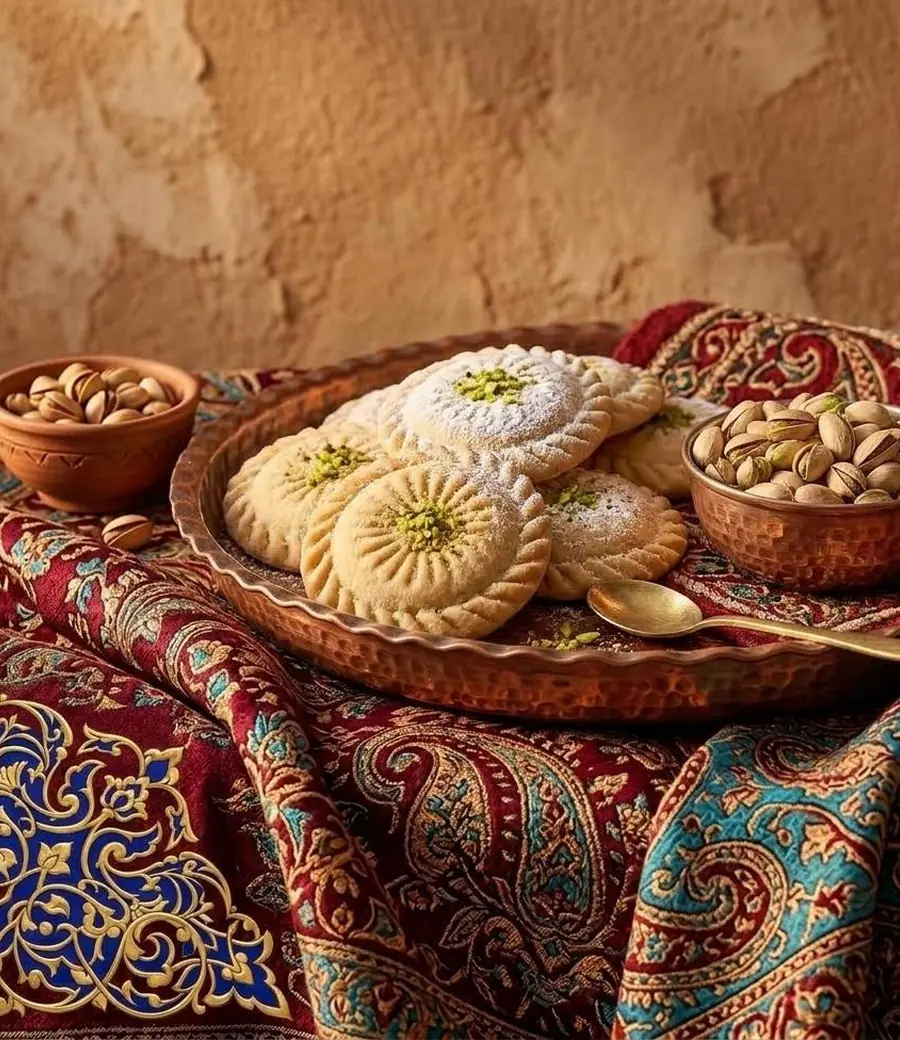
Pistachios are one of Kerman's best-known products and an easy gift to understand. The important comparison happens inside the package. Look for a natural, clean aroma and taste, a dry texture and a reasonably consistent batch. A stale or oily smell, unexpected moisture, excessive broken kernels or careless open storage are reasons to step back, even when the outer box looks expensive.
If sampling is offered, taste from the batch you intend to buy. Compare unsalted and salted options according to the recipient rather than assuming stronger seasoning means better quality. For a formal gift, a moderate box of fresh, even nuts often communicates more care than a large box padded with presentation material. Clear product information and a sound seal also make the gift easier to trust.
Heat is the quiet risk on the journey. Buy late in the visit when practical, keep sealed packs out of direct sun and do not leave them in a hot closed vehicle. Several smaller packages preserve the unopened portion and divide more easily among recipients. Check current destination and carrier rules yourself when transporting a large food quantity; an editorial guide is not a customs clearance.
Kolompeh, qavoot and cumin solve three different gift problems
Kolompeh is Kerman's recognizable filled pastry, commonly associated with dates and aromatic ingredients. It suits a shared tea table, but it is vulnerable to pressure. Check the production information, the condition of the seal and whether the pieces are already cracked or moving freely. A rigid, closely fitted box is more useful than decorative empty space. Read the ingredients because recipes differ and may include nuts, wheat or other allergens.
Qavoot is a powdered local preparation sold in multiple blends rather than one fixed recipe. Names and transliterations vary, so the ingredient list is more reliable than an English label alone. Some blends may be sweeter, spicier or nuttier than others. Choose for the recipient's taste, ask how the product is normally served, and select a package that closes securely and excludes moisture. Never make a medical or nutritional promise from a traditional reputation.
Kerman cumin is light, compact and useful for someone who cooks. Aroma is central: compare a small quantity rather than buying by bag size. Packaging should be dry, clean and clearly closed. Spices lose character when stored too long or exposed to heat and air, so a realistic amount is kinder than a bulk gift that sits unused. A short note explaining the ingredient and one ordinary culinary use can make a small packet feel considered.
- Buy fragile sweets close to departure and keep their box above heavy luggage.
- Treat qavoot as a family of blends; read ingredients every time.
- Choose cumin by clean aroma and packaging, not by an unsupported purity claim.
- Keep food separate from textiles and metal polish inside the suitcase.
Pateh embroidery: turn the back over before admiring the front
Visit Iran describes pateh as a Kerman embroidery tradition in which coloured stitches cover a woollen ground with motifs that can include the boteh and tree of life. That history gives the object meaning, but it does not replace inspection. Look for a coherent rhythm of stitches, controlled fabric tension, secure edges and colour choices that support the pattern. Then inspect the reverse for loose threads, knots and careless finishing.
Handwork can include small variations; damage and weak construction are different. A distorted ground, severe puckering, unstable edges or conspicuous gaps should not be romanticised as proof of authenticity. Compare pieces with a similar purpose and size. Dense work naturally requires time, yet density alone does not answer whether the textile is balanced, durable and suitable for the recipient's home.
For a first purchase, a runner, cushion cover or modest framed panel is often more useful than a monumental piece. Ask about fibre content, cleaning, storage and any named workshop or maker. If attribution materially raises the price, request written information appropriate to that claim. A beautiful pateh can be a memorable gift without being presented as an investment or as independently certified heritage.
Copperwork: separate intended function from surface appeal
Copper metalwork and engraving appear among Kerman's crafts. Decide first whether a bowl, tray or vessel is decorative or intended for food use. If it is sold for contact with food, ask specifically about the inner lining, care, cleaning and appropriate uses. Do not infer food safety, heat tolerance or dishwasher suitability from colour, shine or a general statement about traditional craft.
For decorative work, inspect the form from several angles, run your eyes along the rim and check the base. Hammering or engraving should make sense across the surface; sharp edges, unstable feet and careless joins are practical defects. Weight by itself does not prove quality. A smaller, balanced piece often travels more safely and fits a real home better than a broad tray chosen only for impact.
Plan scratch protection before paying. Use a soft first layer, cover protruding edges, stop pieces from rubbing against one another and place the object where luggage pressure will not deform it. Record care instructions before discarding labels. If a workshop, maker or technique is part of the price, keep the receipt and description rather than relying on a spoken superlative.
Use the Ganjali Khan bazaar as a comparison route, not a countdown
The Ganjali Khan Complex brings together a historic square, bazaar and public buildings in central Kerman. Official descriptions help establish the market's long urban and economic setting. For a present-day buyer, the useful advantage is concentration: you can observe food packaging, embroidery, metal finishes and price explanations across several sellers without treating the first display as the only opportunity.
Make the first pass educational. Smell or sample food when appropriate, compare labels and note how fragile products are packed. For pateh, compare equal formats and inspect the reverse. For copper, decide the function and ask to see the final protective packaging. Calm, repeatable questions about materials, making, use and care produce more useful answers than asking which item is simply 'the best in Kerman.'
A historic location does not authenticate every item in it. When origin, maker, age or technique changes the price substantially, look for proportionate documentation and an itemised receipt. You can enjoy the architecture and the act of browsing while keeping editorial context separate from a commercial guarantee.
Build a Kerman gift around one anchor item
For family sharing, combine a sensible box of pistachios with fresh kolompeh and keep both protected according to their different needs. For colleagues, several small sealed food packs are easier to distribute. For a cook, cumin can be more useful than a decorative object, while qavoot works best when the recipient is curious about the blend and receives clear ingredient and serving information.
For a formal host, let one small pateh or well-finished copper object anchor the gift and add only a restrained edible component. For an international traveller, a textile runner usually takes less space and faces less breakage risk than a large metal vessel. Avoid assuming every foreign recipient wants a heavily ornamented object; measure their space and consider the colours and functions they actually use.
Add a concise card naming Kerman, the food or craft, and one care or serving note. Do not invent a maker's story, attach an authenticity certificate you do not possess or promise future value. The explanation should help the recipient enjoy the object, not inflate an ordinary tourist purchase into an unsupported collectible.
Pack for heat, pressure, powder and abrasion separately
Pistachios, cumin and qavoot need dry, securely closed packaging and protection from prolonged heat. Put powder containers inside an additional clean bag in case a seal fails. Kolompeh needs a rigid box and a position above heavy luggage; an ornate sleeve cannot stop the pastries moving or crushing. Follow any storage instruction printed by the producer rather than assuming every local food travels the same way.
Pateh should stay clean, dry and separate from food, liquids and metal surfaces. Fold only when the maker says the format permits it, avoid a sharp crease under weight and retain the care information. Copper needs a soft contact layer and protection from rubbing, denting and pressure at the rim. Confirm that the exact object you selected is the one inside the final package.
Before leaving the seller, lift and gently test the packed object; internal movement calls for more support. Keep receipts for valuable purchases and calculate the finished size and weight, not the display object's dimensions alone. Airline, customs and destination restrictions change, so confirm current rules directly with the relevant authority or carrier.
Let transparent information carry more weight than an absolute claim
Regional reputation is a starting point for discovery, not proof about a particular product. Ask practical provenance questions: where was it made or packed, what are its ingredients or materials, who made it if known, and what care does the seller recommend? Written, specific answers become increasingly important as a purchase becomes more expensive.
Be cautious with phrases such as guaranteed authentic, medicinal, ancient or investment quality when no relevant evidence accompanies them. For food, freshness and clear ingredients matter. For textiles and metalwork, visible construction, appropriate function and a credible account of materials matter. An independent expert may be necessary when age, attribution or collectable value drives a high price.
The best Kerman souvenir is not the heaviest basket. It is the one whose quality you could examine, whose story you can tell accurately and whose recipient can realistically use or enjoy. A fresh food shared promptly or a modest, carefully finished craft object can preserve the memory of Kerman more honestly than an impressive purchase that arrives damaged or unexplained.
Frequently asked questions
What are the most famous souvenirs from Kerman?
Pistachios, cumin, kolompeh and qavoot are well-known edible choices. Pateh embroidery, copperwork and carpets are among the lasting craft options associated with Kerman.
How can I choose good Kerman pistachios?
Prioritise a clean aroma and taste, dryness, a reasonably uniform batch, sound storage and a sealed package. Stale or oily odours, moisture and many damaged kernels are warning signs.
What should I check when buying pateh embroidery?
Inspect stitch consistency, fabric tension, edges, colour balance and the reverse for loose threads or weak finishing. Ask about materials, care and the maker when that information affects the price.
Is qavoot suitable as a gift?
Yes for a recipient interested in regional foods, but blends vary. Read the full ingredients, consider allergies and sweetness preferences, and choose dry, secure packaging with serving guidance.
How should I pack Kerman souvenirs for a flight?
Keep food sealed, dry and away from heat; place kolompeh in a rigid box above heavy items; isolate pateh from liquids; and wrap copper softly against scratches and dents. Verify current carrier and destination rules directly.
Sources and notes
The date beside a source is its recorded access date, not confirmation that the link works today or that the whole article has just been reviewed. The article’s update date is shown separately.
- Kerman Province — Visit Iran
Recorded source access: - Pateh Douzi of Kerman — Visit Iran
Recorded source access: - Ganjali Khan Complex — Visit Iran
Recorded source access: - A trip to Kerman: history, nature and colorful souvenirs — Visit Iran
Recorded source access: