Quick takeaways
- Visit Iran describes the Safavid-era Ganjali Khan complex as a group including a square, bazaar, mosque, school, bathhouse, cistern and mint.
- Give the visit three baskets—edible gifts, a lasting craft and a personal purchase—with a spending and luggage limit for each.
- Inspect pateh as textile work and copper as a formed object; neither a busy pattern nor a bright surface proves quality by itself.
- Buy foods late enough to reduce heat and pressure, and follow each producer’s label rather than assuming one shelf life for every product.
Treat Ganjali Khan as a historic complex and a working market
Visit Iran presents Ganjali Khan as a Safavid-period complex in Kerman’s historic centre, bringing together a square, bazaar, mosque, school, bathhouse, cistern and mint. Shopping here therefore sits inside a larger architectural and civic setting. Give the place time to be more than a row of counters: notice the route, the buildings and the way crafts and foods are presented before turning the visit into a transaction.
If your schedule permits, make one viewing pass without buying. Locate pateh, copper and edible gifts, observe the available sizes and note which displays explain materials or care clearly. This first pass is not a promise that every stall carries the same range or quality. It simply prevents the first large textile, heavy vessel or decorative food box from defining the rest of your luggage.
Give the walk three shopping baskets and firm limits
Divide the list into edible gifts for sharing, a lasting craft for a specific recipient and a personal keepsake. Write a maximum spend and packed weight beside each category. A large pateh panel and a copper vessel may both look appropriate in the market but require different budgets, space and care. The purpose of the list is to make those trade-offs visible before enthusiasm turns into excess.
Assign a recipient and an intended use to every item. Pistachios may suit a household; a compact pateh piece may work for someone who uses textiles; a small copper object may suit a person who knows how it will be displayed or maintained. A famous regional category is not automatically the right gift. Fit, usable quantity and the journey home matter more than collecting a checklist of Kerman names.
- Name the recipient before choosing the format.
- Reserve luggage weight for dense copper and protective packing.
- Compare like sizes and uses before comparing price.
- Leave fragile or heat-sensitive foods until late in the route.
Inspect pateh as embroidery, construction and a usable object
Look beyond the front pattern. Examine the ground cloth for damage or distortion, the consistency of the stitching, loose threads, edges and the reverse where access is appropriate. If the piece has become a cushion cover, bag or table textile, assess the final seams and closures separately from the embroidery. Dense decoration can be beautiful, but density alone does not establish age, labour or overall finish.
Choose a format that the recipient can store or use. A smaller finished piece may travel and live more easily than a large panel bought only because it dominates the display. Ask what fibre or fabric the seller describes, how the object should be cleaned and whether colour transfer or moisture needs special care. For important claims about age, workshop or hand production, seek written detail proportionate to the price.
Judge copper by form, joins, use and care—not shine alone
Check whether the object sits steadily and whether rims, handles, feet and decorative attachments feel secure. Look across the surface under ordinary light for unintended dents, sharp edges or irregularities that matter to the stated use. Hammer marks or patina may be intentional, but a visual style is not proof of age or a particular method. Ask the seller to distinguish decoration from construction and to explain expected changes with use.
If the vessel is presented for food preparation, serving or heat, request specific information about its lining, intended use, cleaning and maintenance. This guide cannot determine food or heat suitability from a photograph or exterior colour. Follow the maker’s instructions and replace vague assurances with written details when the purchase is significant. For travel, a compact, structurally simple piece is often safer than a broad or projecting form.
Compare pistachios, kolompeh and qavoot as different foods
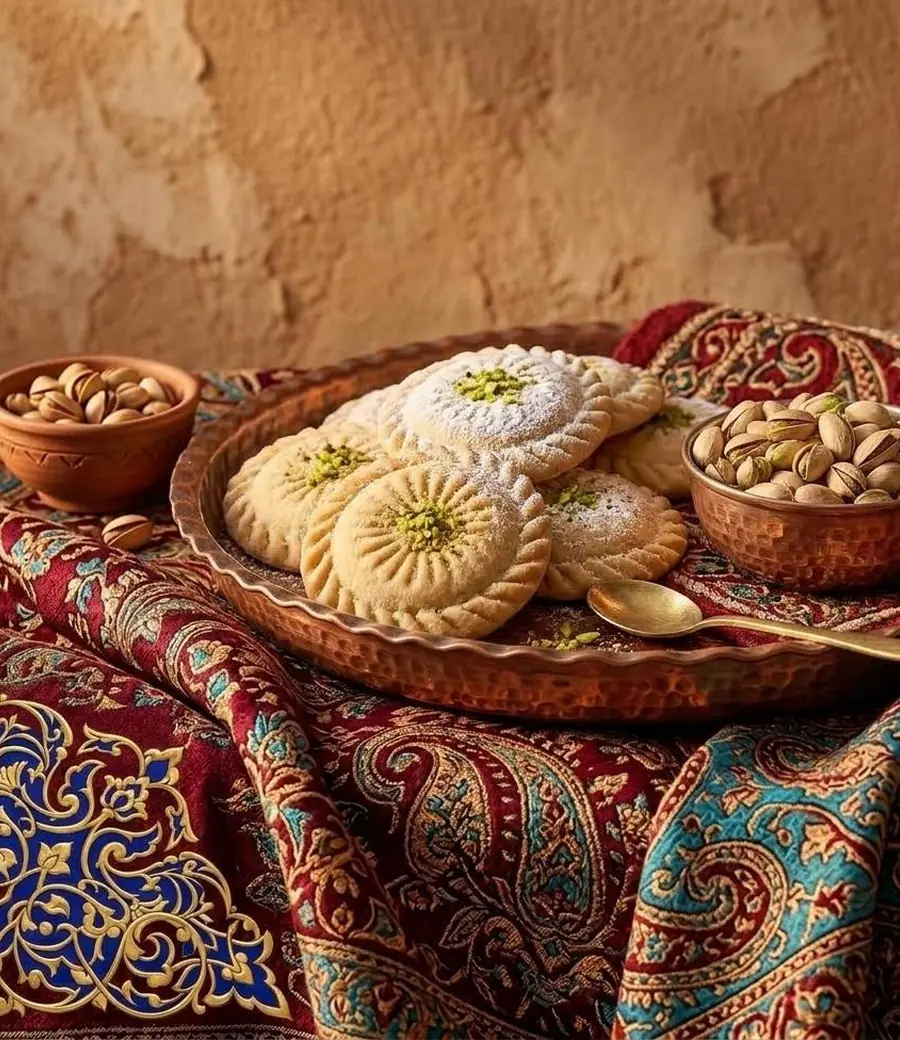
Visit Iran’s Kerman material associates the province with pistachios and edible gifts including kolompeh and qavoot. For pistachios, examine the package condition, stated weight, product information and protection against moisture or accidental opening. For kolompeh, protect the box from crushing and follow the producer’s date and storage directions. Do not infer freshness, ingredients or shelf life from a generic regional description.
Qavoot is a powdered preparation that can vary by recipe and producer. Read the ingredient list when available, especially for a recipient with allergies or dietary restrictions, and check that the closure can survive movement. If you are buying for several people, smaller labelled packs can be easier to divide and protect than one large container. Keep food away from heat and separate it from metal objects that can press or puncture packaging.
| Category | Useful comparison | Main travel risk |
|---|---|---|
| Pateh | construction, reverse, edges, intended use | moisture, snagging and pressure |
| Copper | form, joins, stated use and care | weight, dents and sharp contact |
| Pistachios | label, pack integrity and usable weight | heat, moisture and opening |
| Kolompeh or qavoot | label, ingredients, date and closure | crushing, leakage and heat |
Use the same questions to make sellers comparable
Ask each shortlisted seller a compact set of questions: where is the item described as made, what are its main materials or ingredients, how should it be cared for, why does this version differ from the cheaper or more expensive one, and how will it be packed for your mode of travel? Consistent questions make answers easier to compare and reveal when two apparently similar products are actually intended for different uses.
For higher-value craft purchases, keep an itemised receipt and the seller’s contact details. If the sale depends on provenance, age, precious material or a special production claim, ask what documentation supports it and make sure the written wording matches the promise. Verification should be proportionate rather than theatrical: a modest contemporary gift needs clarity, while an expensive collectible claim deserves independent expertise.
Build a Kerman gift around one clear relationship
A coherent gift does not need every regional category. One edible product and one small lasting object can create a useful balance: pistachios with a compact pateh piece, or kolompeh with a modest decorative copper object when the recipient suits it. Keep the food sealed and wrap the craft separately. The connection should be understandable without a crowded hamper or a long explanation.
For an international recipient, favour labels that remain legible, modest dimensions and a simple note naming the place and craft without making unsupported heritage claims. Check the latest airline, customs and destination rules yourself; a shop’s experience with travellers is helpful context, not an import guarantee. Avoid fresh, leaking or poorly identified food when the journey is long or crosses borders.
Pack for the rest of the day, not only the counter handover
Tell the seller whether the purchase will be carried through the bazaar, remain in a warm vehicle, travel by rail or air, or enter checked luggage. Request protection suited to that route. Place dense copper low and immobilise it, keep pateh dry in a breathable protective layer, and put kolompeh above heavy objects. Qavoot and pistachio closures should be checked again before they enter the suitcase.
Do not let a decorative outer box conceal weak internal support. Test that the item does not move freely, and add clean padding where needed without pressing food. Keep important receipts, product descriptions and any care instructions in a separate flat pocket. If luggage space is already tight, leaving a large object behind is better than improvising unsafe packing at the airport.
Finish with a two-minute exit audit
Before leaving the area, count the packages and match important receipt descriptions with the actual items. Check seals, lids, textile edges, handles and protective layers while correction is still possible. Label the recipient on a small note or in your phone so you do not have to reopen every parcel at the destination. Confirm that no food box is carrying the weight of copper.
Ask four final questions: does each item have a recipient, a reason, a protected place and a total cost you accept? If one answer is missing, pause. A successful Ganjali Khan shopping visit is not measured by bag count. It is the combination of a memorable historic route and a small group of objects that arrive intact, remain useful and can be described honestly.
Frequently asked questions
What is the Ganjali Khan complex?
Visit Iran describes it as a Safavid-era group in Kerman’s historic centre that includes a square, bazaar, mosque, school, bathhouse, cistern and mint.
What souvenirs can I consider at Ganjali Khan Bazaar?
The practical categories in this guide are pateh embroidery, copper objects, pistachios, kolompeh and qavoot. Availability and quality vary, so compare current products rather than assuming every seller has the same range.
How should I check a pateh gift?
Inspect the ground cloth, stitching, loose threads, reverse when appropriate, edges and any final seams or closures. Ask about materials and care, and request written support for important age or provenance claims.
Can I use any copper vessel for cooking or serving food?
No such conclusion should be made from appearance alone. Ask the maker or seller for specific lining, intended-use and care information, and follow those instructions.
When should I buy Kerman food gifts?
Buy them late enough to reduce heat, pressure and unnecessary carrying. Check the producer’s label, package integrity, ingredients where relevant, dates and closure, then separate food from dense craft objects.
Sources and notes
The date beside a source is its recorded access date, not confirmation that the link works today or that the whole article has just been reviewed. The article’s update date is shown separately.
- Ganjali Khan Complex — Visit Iran
Recorded source access: - Kerman Province — Visit Iran
Recorded source access: