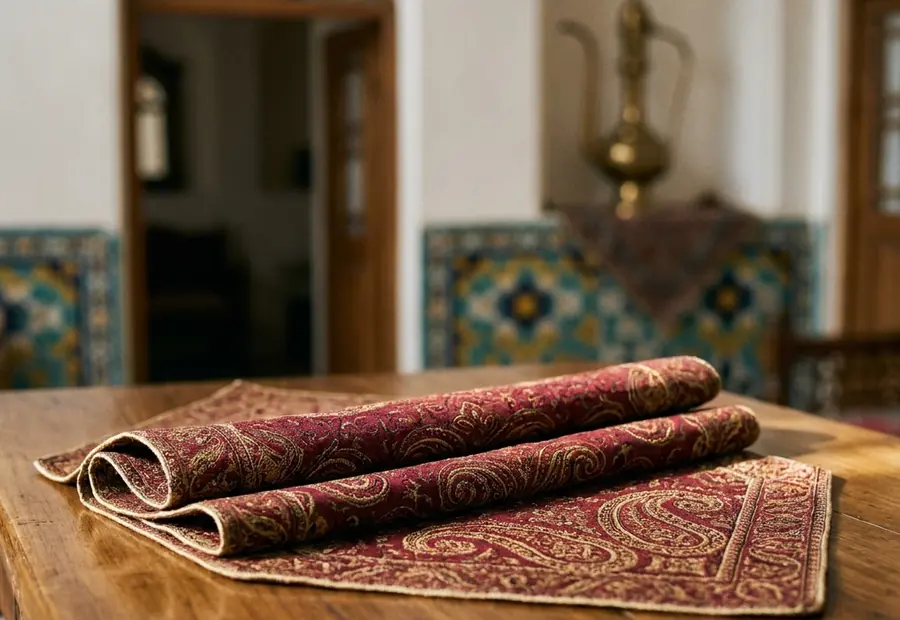
Quick takeaways
- Termeh is associated with Yazd’s textile and handicraft tradition, but a city label alone does not verify a specific piece.
- For a finished product, inspect lining, seams, corners and edge finishing as carefully as the face fabric.
- A runner, cushion cover or compact table textile is usually easier to use and transport than an oversized piece.
- Ask for written fiber, care and origin information instead of inferring them from color or pattern.
Begin with use, dimensions and the recipient—not the pattern
Termeh is commonly encountered as decorative fabric and as finished objects such as runners, table covers, cushion covers, pouches and framed textiles. The best starting question is not which pattern is most elaborate, but where the piece will be used. A runner needs compatible length and width; a cushion cover needs an exact insert size; a formal gift needs finishing that remains convincing after the first visual impression.
Measure the intended table, shelf or cushion before shopping and keep the dimensions on your phone. For a recipient abroad, consider interior style, storage space and willingness to follow special care instructions. A compact, finished item is often a safer gift than uncut fabric whose final use is uncertain.
Yazd’s reputation provides valuable regional context, not automatic proof about every textile offered in the city. Judge the actual object, ask what is documented, and keep the receipt and label with your photographs.
Read the face fabric slowly under even light
Lay the piece as flat as the shop allows and view it from the center and both ends. Look for unexpected pulls, broken-looking threads, stains, abrasion, crushed areas and abrupt changes in sheen. Strong display lighting can hide marks or make metallic detail appear more uniform than it is, so change the viewing angle.
Pattern density is a design preference, not a quality score. Compare whether repeated motifs stay deliberate across the usable area and whether borders relate cleanly to the center. Small hand-production variation may exist, but a visibly drifting border or damaged field deserves a direct question.
If two pieces are close in size and price, compare them side by side. This is more informative than trying to remember the first one after visiting several shops.
Inspect pattern alignment, cuts and corners
Finished termeh products depend on cutting and assembly as well as the fabric itself. On a runner or table cover, check whether major motifs sit sensibly within the rectangle and whether opposing borders feel balanced. On paired cushion covers, compare orientation so the set does not look accidentally mismatched.
Examine all four corners. They should lie predictably rather than twisting because one layer was stretched during sewing. Curved or decorative edges need the same scrutiny: uneven trimming can make an otherwise attractive textile difficult to display.
Do not demand machine-like perfection from every handmade step. Instead, distinguish expressive variation from an assembly problem that affects use, symmetry or durability.
Turn the product over: lining and seams carry the purchase
The reverse often reveals more than the front. Check whether the lining lies smoothly, whether loose threads have been secured and whether seam allowances create bulky ridges. Open any zipper gently and inspect how it is attached; test closures without forcing them.
For a table textile, ask whether decoration on the reverse could scratch a polished surface. For a pouch or cushion cover, inspect stress points at the opening. A neat face does not compensate for a weak closure or an unfinished internal edge.
If the seller discourages inspection of the back, lining or inside, pause the purchase. A travel gift should survive normal handling, packing and first use without an immediate repair.
Treat fiber and origin claims as questions to document
Color, softness, weight and shine can help compare pieces, but they do not reliably establish fiber composition, exact production method or workshop origin. Ask the seller to state the material and place of production on the label or receipt when those claims matter to your decision.
Terms such as handmade, traditional, silk, old or Yazd-made can be used loosely. Request a specific explanation: which stage is done by hand, what the principal fiber is, who made the finished item and whether the seller can identify a workshop. A careful answer is more useful than a prestigious adjective.
Avoid using price alone as proof. Materials, dimensions, sewing, retail location and packaging all influence the amount charged. Compare like with like and record what each quote includes.
Choose color and motif for a real room
Photograph the piece in neutral light if the shop permits it, because deep reds, navy, turquoise and metallic accents may look different away from warm lamps. Consider the recipient’s furniture and whether the textile will be an accent or a dominant surface.
A very dense formal design can suit a ceremonial table yet feel difficult in a small modern room. Conversely, a restrained border may be easier to use frequently. There is no universal best motif; usefulness depends on scale, contrast and context.
When buying a set, place the pieces together and verify that their color families and dimensions work as a group. Similar names do not guarantee a visually matched set.
Get care instructions before the textile is wrapped
Ask how the specific product should be cleaned, dried, pressed and stored. Do not assume that every termeh item tolerates machine washing, strong detergent, steam or direct ironing. Lining, decorative threads and trims may require different treatment from the face fabric.
Request written care guidance when possible. At home, keep the label and test any cleaning method cautiously on a hidden area. Protect the piece from prolonged moisture, crushing and unnecessary direct sunlight during storage.
For a gift, include a short care note in the recipient’s language. This small step makes a decorative object much more usable and reduces damage caused by guesswork.
Pack against folds, moisture and snagging
Ask to see the textile before final packing, then photograph its condition. Fold it along natural lines with clean tissue between decorated surfaces, or roll it loosely around a smooth core when the construction allows. Avoid sharp compression across raised trim or stiff corners.
Place the wrapped textile inside a clean protective sleeve, but do not seal damp fabric or trap shop fragrance against it. Keep hard souvenirs, liquid bottles and shoes in separate compartments. A structured box can protect finished corners but adds volume and weight.
Carry receipts and material descriptions separately or photograph them. If customs or airline rules matter for your route, verify them from official sources rather than relying on a retailer’s general assurance.
Use a disciplined final comparison
Before paying, compare at least two candidates using the same checklist: intended use, exact dimensions, face condition, pattern placement, lining, seams, closure, written material claim, care guidance, packaging and total price. The best choice is the one with the clearest fit and fewest unresolved questions.
If a defect has been disclosed and accepted, ask that it be noted. If a claim is central to the value but cannot be documented, treat it as unverified and decide accordingly. Do not let time pressure turn uncertainty into certainty.
A good termeh purchase should remain attractive after it leaves the atmosphere of the bazaar. Practical scale, dependable finishing and understandable care are what allow the textile to become part of a home rather than stay in a suitcase.
Frequently asked questions
How can I judge termeh quality without being a textile expert?
Check the real object systematically: face condition, pattern placement, dimensions, lining, seams, corners and closures. Ask for written material and care information; appearance alone cannot certify fiber or origin.
Is heavier or shinier termeh always better?
No. Weight and shine vary with materials and construction, and neither is a universal quality grade. Compare pieces of similar purpose and ask what the seller can document.
What is the safest termeh gift for travel?
A finished runner, cushion cover, pouch or compact table textile with useful dimensions and sound packaging is usually easier than oversized fabric, provided it suits the recipient.
Can termeh be machine washed or ironed?
Do not assume so. Follow the specific maker or seller instructions because face fabric, lining and decorative threads may respond differently to water, detergent, heat and steam.
What should appear on the receipt?
Request the product type, dimensions, stated materials, claimed place or workshop of production when relevant, price, seller identity and any agreed return or damage terms.
Sources and notes
The date beside a source is its recorded access date, not confirmation that the link works today or that the whole article has just been reviewed. The article’s update date is shown separately.
- Yazd Province — Visit Iran
Recorded source access: - Termeh — Visit Iran
Recorded source access: