Quick takeaways
- Begin with the recipient, occasion, baggage and destination rules—not a generic list of famous objects.
- Small documented crafts usually travel more predictably than fragile or perishable gifts.
- For food, ingredient, allergen, date, seal and storage information matter more than decorative packaging.
- No general guide can guarantee customs acceptance; check the official destination authority and carrier.
Choose the recipient before choosing the symbol
An Iranian gift works best when it respects the person rather than treating nationality as a costume. Start with age, interests, home or office space, dietary needs, religious or ethical preferences and how well you know the recipient. A craft collector, a colleague, a host family and a child need different levels of formality and explanation.
Then define the occasion. A personal thank-you can be warm and modest; a diplomatic or business gift needs transparent value, neutral symbolism and compliance with the recipient organization’s rules. Avoid a gift so expensive that it creates discomfort or looks like an attempt to influence a decision.
Finally, account for the journey. Weight, dimensions, breakability, temperature, border rules and the time before delivery can eliminate otherwise attractive options. The right sequence is recipient, occasion, travel, documentation and only then product.
A practical comparison of Iranian gift families
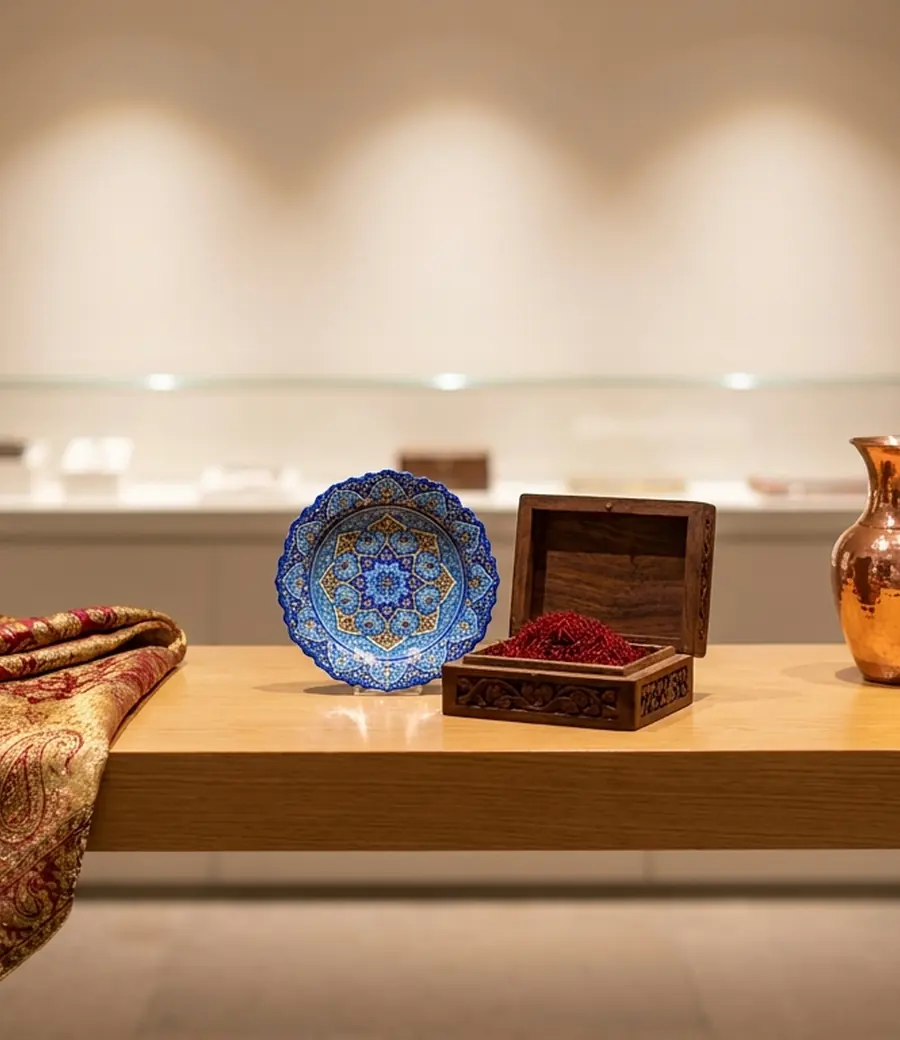
Minakari and other small decorative crafts offer strong visual identity and a compact story, but enamel needs rigid packing. Qalamkar and termeh are lighter, flexible and useful on a table or as a textile accent; they require honest fiber, print or weaving information and care guidance.
Baluchi embroidery can become a pouch, panel or accessory with a clear link to a living craft tradition. Inspect stitching, lining, edges and hardware, and avoid speaking for the maker if you do not have verified biographical information. A maker or workshop card adds more value than an invented romantic story.
Saffron, gaz and other foods can suit cooks or shared hospitality, yet they create more labeling and customs questions. Choose sealed portions with ingredients, allergens, dates, net weight and storage instructions. Do not let a heavy box hide a very small amount of product.
Small crafts: lasting gifts with manageable travel risk
A small minakari plate, compact box, printed textile, embroidered pouch or modest copper object can provide a durable reminder without dominating the recipient’s space. Useful scale is important: ask where the object might sit, hang or be used, and include the appropriate stand or care note.
Inspect the individual object rather than relying on regional fame. Check enamel and rims, textile edges, stitching, closures, reverse surfaces and any hanging system. Ask for material, dimensions, decorative or functional status and maker or workshop information when the seller genuinely knows it.
Explain the gift accurately: name the craft, mention the city or region when supported, describe one visible technique and stop. Do not claim that every object is ancient, unique, fully handmade or representative of all Iranian culture. Precision feels more respectful than exaggeration.
Textiles: light, useful and dependent on honest labeling
Textiles often travel well because they fold and do not shatter. A table runner, small qalamkar cloth, termeh accessory or embroidered bag can work across many homes. Measure dimensions and imagine the actual use; oversized ceremonial cloth may be difficult for a recipient with limited space.
Ask what the fabric and decorative method are, whether color may transfer, and how the item should be cleaned. Printed, woven and embroidered surfaces are different products and should not be described interchangeably. A care card prevents an attractive gift from being damaged in its first wash.
Fold textiles along natural lines and place acid-free tissue or clean neutral paper between decorated surfaces. Protect them from moisture and strong fragrances. If the item includes metal, leather, shells or other animal or plant materials, check destination rules rather than assuming all textiles are treated alike.
Food gifts: begin with label, recipient and destination
Food should be chosen for a known recipient, not only because it is famous. Check allergies, dietary restrictions and whether the person cooks. Saffron can be useful in small quantities; gaz can be shared but often contains nuts, egg white or other allergens depending on the recipe. Read the actual package.
Prefer a factory- or producer-sealed package with ingredients, allergen information, production and best-before dates, net weight, batch or producer identity and storage guidance. A decorative outer box does not replace this evidence. Keep the original label visible through delivery.
Border and airline rules vary by country and may change. Some destinations restrict foods, plants, seeds, wood or animal-derived materials. Consult the official destination customs or biosecurity authority and the carrier. If the rule is unclear, choose a non-food craft instead of asking the recipient to carry the risk.
Formal and corporate gifts without hidden pressure
For a business guest, select a moderate-value object connected to the meeting rather than the recipient’s private identity. A compact desk craft or a labeled shared food package can be suitable, but first check both organizations’ gift limits, anti-bribery policies and disclosure requirements.
Avoid paid editorial claims or ranking language when the gift comes from a sponsor, supplier or institution. Keep the cultural note separate from commercial promotion. If a logo is added, make it removable or discreet so the craft remains useful after the event.
Record supplier, quantity, materials or ingredients and unit cost for organizational purchases. Inspect a sample and define packaging before ordering multiples. Consistency matters, but handmade objects may vary; agree on an acceptable range rather than promising identical brushwork.
Tell a truthful two-minute story
A good gift story has four parts: the object’s name, where its tradition is associated, what visible work the recipient can notice, and how to use or care for it. Keep it short enough to remember. A printed card in the recipient’s language can remove pressure from the moment of exchange.
Sources such as UNESCO and Visit Iran can establish broad cultural and geographic context. They do not authenticate the individual item you bought or prove the life story of its maker. Use documented facts and identify uncertainty. If you know only the retailer, say so.
Avoid presenting Iran as a single frozen aesthetic. The gift is one object from a diverse contemporary society. Emphasize craft skill, material, function and the person who will receive it rather than making sweeping claims about ethnicity, religion or national character.
Packing, paperwork and the handover moment
Fragile crafts need tissue against abrasion, shaped cushioning and a rigid box with no internal movement. Textiles need moisture protection without compressing raised decoration. Food needs an intact seal, temperature-appropriate storage and its original label. Test the package before leaving the seller.
Keep receipts, maker cards and ingredient information in a separate sleeve. Photograph the object and package before travel. If customs declaration is required, describe materials and food accurately; never remove labels or conceal contents to avoid inspection.
At handover, mention care, allergens or storage before the cultural story. Give the recipient permission to use the object rather than treating it as untouchable. For formal gifts, make clear that no response or reciprocal gift is expected.
Final recipient-and-travel checklist
Confirm the recipient, occasion, practical use and appropriate value. Verify dimensions, weight, material or ingredients, maker or producer, dates, seal, care and storage. Check destination and carrier rules from current official information for any food, plant, wood or animal-derived component.
Inspect the exact item and its packing. Keep a plain-language card with the verified name, region, technique and care. Remove exaggerated authenticity, investment, health or customs promises from your description. A responsible gift does not transfer uncertainty to the recipient.
The best Iranian gift is not necessarily the most expensive or visually dense. It is the object or food chosen with attention, documented honestly, packed for the real journey and explained in a way that lets the recipient understand and enjoy it.
Frequently asked questions
What is a safe all-purpose Iranian gift for an international guest?
A small documented craft such as minakari, a textile accessory or framed embroidery is often easier than food because it keeps well and can be explained. The recipient’s taste and destination still matter.
Can I take Iranian sweets or saffron into any country?
No. Food and plant-product rules differ by destination and can change. Use sealed, clearly labeled packaging and check the destination authority and carrier before travel.
Should I choose the most traditional-looking object?
Choose something the recipient can use or display comfortably. A short accurate story and traceable maker information matter more than an exaggerated traditional appearance.
How do I present a gift in a business setting?
Keep the value proportionate, disclose ingredients or materials, avoid gifts that create an obligation and follow the recipient organization’s ethics and gift policies.
What information should accompany the gift?
Include a concise card with the craft or food name, region, material or ingredients, maker when known, care or storage instructions and a cautious cultural note.
Sources and notes
The date beside a source is its recorded access date, not confirmation that the link works today or that the whole article has just been reviewed. The article’s update date is shown separately.
- Isfahan — Creative Cities Network — UNESCO
Recorded source access: - Enamel, Brilliant Art of Fire, Earth and Furnaces — Visit Iran
Recorded source access: - Sistan & Baluchestan Province Handicrafts — Visit Iran
Recorded source access: - FAO and Iran: quality integrity in saffron value chain — Food and Agriculture Organization of the United Nations
Recorded source access: