Quick takeaways
- Isfahan is widely presented as Iran’s leading contemporary center for minakari.
- Inspect enamel, rim, metal form, reverse and painted detail under even light.
- Handmade variation is context, not automatic proof of quality or origin.
- For travel, choose a useful scale and test the protective box before paying.
What minakari is—and what a buyer can actually judge
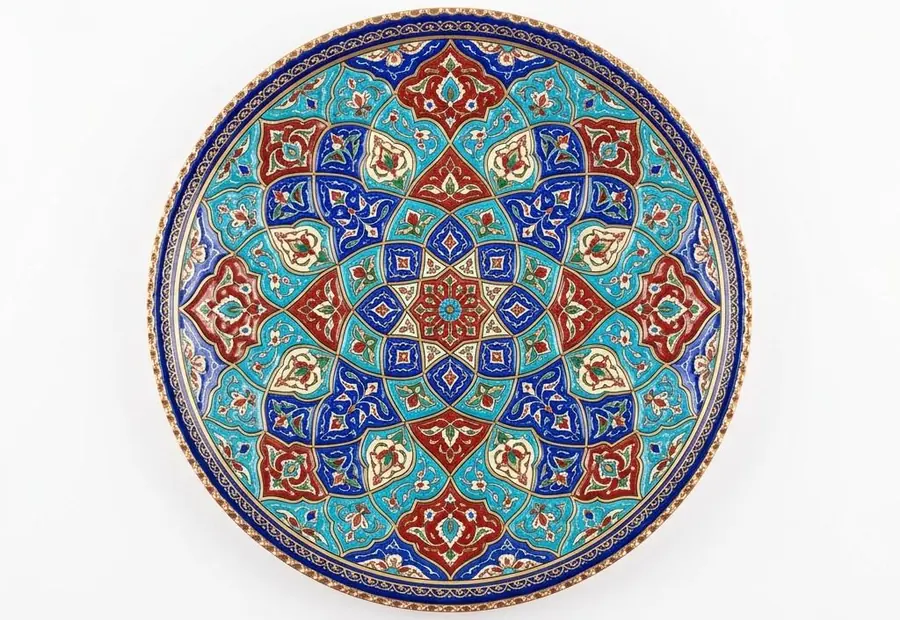
Minakari is an enamel-decorated craft in which a prepared object receives glassy color and painted ornament through several stages of work and firing. Knowing this sequence is useful because a finished piece is more than a blue pattern. The metal form, enamel ground, painted layer, rim and final firing all affect how the object looks and how safely it can be handled.
A traveler cannot establish the exact workshop, age or chemical composition from appearance alone. What you can do is compare visible condition, workmanship, usefulness, labeling and the seller’s willingness to document important claims. Treat regional reputation as context rather than a certificate attached to every object in a shop.
Start by deciding whether you need wall decoration, a tabletop object, a small box or a formal gift. A clear use narrows the size and form, makes defects easier to compare and prevents an elaborate but impractical purchase. Photograph the label and receipt before the object is wrapped.
Inspect the enamel surface in calm, even light
Tilt the object slowly rather than judging it from the front of a bright display. Look for chips, hairline cracks, bubbles that interrupt the surface, cloudy patches and abrupt changes in gloss. A few tiny traces of hand production may exist, but damage at the rim or a spreading crack is different from harmless visual variation.
Pay special attention to edges, raised points and the place where the object meets a stand. These areas receive impact during handling. Run a finger near—not across—a suspicious edge and ask the seller to unwrap the piece completely. Never accept a box that prevents inspection of the actual object.
Compare two or three pieces of similar size and price. Side-by-side comparison reveals whether a mark is part of the workshop’s normal finish or an isolated defect. Do not let intense blue color or gold accents distract from basic surface condition.
Read the painted design as controlled work, not simple symmetry
Good painted detail should feel intentional at the viewing distance for which the object was made. Lines can vary because they are drawn by hand, yet borders should not dissolve into accidental smears and repeated motifs should keep a readable rhythm. Examine transitions between the center, border and rim.
Perfect machine-like repetition is not the only sign of quality, and visible variation is not automatically valuable. The useful question is whether the artist controlled the variation. Check whether crowded areas remain legible and whether empty space supports the composition instead of appearing unfinished.
Use your phone camera only as a secondary aid. Zoom can reveal a broken line, but screen sharpening and shop lighting can exaggerate texture. Make the final judgment with your eyes, then keep a photograph of the front and reverse for your records.
Check the form, balance, rim and reverse
Place the object on a level counter if its form allows. A plate or box should sit predictably without rocking, and paired parts should meet cleanly. For a vase, look along the silhouette for sudden deformation. Handmade work need not be geometrically sterile, but the form should support its intended use.
Inspect the rim for roughness, exposed sharp metal and uneven finishing. Then turn the object over. The reverse can show whether the base is stable, whether a hanging fitting is secure and whether the seller or workshop has provided useful identification. A decorative sticker is not the same as traceable maker information.
Ask what the underlying material is and whether the piece is intended for food contact or decoration only. Do not infer food safety from a plate shape. Unless the maker explicitly documents a functional use, treat painted enamelware as a decorative object.
Choose size for the recipient, room and journey
Large plates create impact but require wall space, strong mounting and a wide protective box. Small plates, compact vases and boxes are usually easier to carry and display. Measure the object and its packed dimensions, not only the diameter printed on a label.
Consider the recipient’s home. A restrained piece may fit a modern interior better than the most crowded pattern, while a formal office gift needs stable presentation and a concise explanation. Do not assume that higher price or greater size creates a more respectful gift.
For cabin baggage, check the airline’s current rules and leave room for cushioning. If the object will be checked, a rigid inner box inside a clothing buffer is safer than gift paper alone. Customs and carrier rules vary; the seller cannot guarantee acceptance at every destination.
Ask provenance questions without turning the counter into an interrogation
Useful questions are specific: Who made or supplied this piece? What is the base material? Is it decorative or functional? What care does it require? Can those details appear on the receipt or maker card? A credible seller can distinguish what is known from what is simply traditional marketing language.
Be cautious with absolute claims such as antique, unique, museum quality or guaranteed investment. Such statements require evidence beyond a verbal assurance. If provenance is central to the price, ask for documentation you can keep and verify later.
The source pages linked below explain minakari and Isfahan’s craft context; they do not authenticate a retail item. The individual piece still needs inspection, documentation and a price comparison appropriate to its material, scale and workmanship.
Compare price through like-for-like evidence
Compare objects with similar diameter, form, metal base, painted density, finish and packaging. A low price may reflect a smaller object or simpler work, while an ornate box can inflate the apparent value of an ordinary piece. Separate the object’s price from presentation when possible.
Ask whether a stand or hanging fixture is included and test it. Hidden extras matter if the object cannot be displayed safely without additional hardware. For multiple gifts, inspect each piece rather than approving one sample and accepting sealed boxes.
A written invoice protects memory and improves comparison. Record the item, dimensions, declared material and promised workshop or origin. Avoid publishing or relying on exact current prices from an undated guide because craft prices and currency conditions change.
Make packaging part of the purchase
Ask the seller to pack the object while you watch. The piece should not move freely inside the inner box, and pressure should not rest directly on a raised rim or decorative point. Soft tissue prevents abrasion, while shaped padding and a rigid shell manage impact.
Close the box, lift it gently and listen for movement. If the object shifts, request more support. Keep the receipt and maker card in a separate sleeve so they do not rub the enamel. A gift ribbon belongs outside the protective structure, not in place of it.
After travel, let the package reach room temperature before opening if it has moved between extreme conditions. Follow documented care instructions and avoid abrasive cleaners, prolonged moisture and improvised wall mounting.
A final two-minute minakari checklist
Confirm that the chosen form suits the recipient, the enamel has no troubling chip or crack, the rim is finished, the object sits or hangs securely, the painted design is controlled and the reverse has been inspected. Recheck the exact item after it returns from wrapping.
Confirm the declared material, maker or workshop information when available, dimensions, decorative or functional status, care instructions and return terms. Keep claims modest when you present the gift: describe the craft and the place without promising an age or authenticity you cannot prove.
Finally, test the packed box, photograph the object and receipt, and plan where it will sit in your luggage. The best souvenir is not the busiest plate in the shop; it is the well-examined piece that arrives safely and remains understandable and useful.
Frequently asked questions
How can I identify good minakari without being an expert?
Inspect the whole object under even light: the enamel should be intact, the form stable, the rim finished and the painted pattern deliberate. These observations help compare pieces, but they do not certify age or origin.
Are tiny variations proof that a piece is handmade?
Small variations may reflect handwork, but irregularity alone is not proof of quality or provenance. Judge whether the variation belongs to a coherent design and ask for written maker and material information.
Is a larger minakari plate a better gift?
Not necessarily. A smaller plate, box or vase that fits the recipient’s space and survives travel can be more useful than a large decorative object.
Can I wash minakari in a dishwasher?
Do not assume it is dishwasher-safe. Follow the maker’s care instructions; gentle dusting and limited contact with moisture are usually safer for decorative pieces.
What should be written on the receipt?
Ask for the object type, material, dimensions, maker or workshop when known, any promised origin, and the seller’s terms for damage discovered before departure.
Sources and notes
The date beside a source is its recorded access date, not confirmation that the link works today or that the whole article has just been reviewed. The article’s update date is shown separately.
- Enamel, Brilliant Art of Fire, Earth and Furnaces — Visit Iran
Recorded source access: - Isfahan — World City of Handicrafts — Visit Iran
Recorded source access: