Quick takeaways
- Qottab, baklava, loz and haji badam are recognizable Yazd sweets; freshness and a box that resists heat, pressure and movement matter.
- Termeh can be a formal lasting gift, but weave, stitching, lining, edges and a useful size deserve more attention than decorative density.
- Cotton zilu is linked with the desert environment and Meybod; small formats can fit contemporary homes and luggage better than a large floor covering.
- Meybod pottery is visually distinctive but fragile. Inspect chips, cracks, form and intended use, then treat protective packing as part of the purchase.
What should you buy in Yazd?
Choose sweets when the gift will be delivered soon and shared: qottab is the familiar symbol, while smaller haji badam or loz pieces can be easier to divide. Choose termeh for a more formal or lasting textile gift, but match the format to a real table, shelf or room. Choose a small zilu or zilu-derived object for someone who appreciates restrained geometric design. Choose Meybod pottery only when you have space and a protective packing plan.
UNESCO's description of the Historic City of Yazd emphasizes a living urban fabric shaped by adaptation to a desert environment, with traditional districts, markets and practices still part of the city. That context helps explain why preservation-friendly sweets, weaving traditions and workshop crafts appear together in its souvenir landscape. It does not, however, certify every commercial package or object. Each purchase still needs its own checks.
A good Yazd gift answers three practical questions: Will the recipient use or enjoy it? Can you explain its connection to Yazd or Meybod accurately? Can it reach the destination in good condition? Starting here is more reliable than filling a large box with unrelated products simply because each is locally branded.
| Souvenir | Best for | Check before buying |
|---|---|---|
| Qottab or baklava | Hosts, family and a shared food gift | Freshness, ingredients, seal, stable pieces and a rigid box |
| Loz or haji badam | Several recipients and smaller portions | Dry clean packaging, heat protection and allergen information |
| Termeh | Formal gift or practical home textile | Weave consistency, stitching, lining, symmetry, edges and useful dimensions |
| Zilu | Design-minded recipient and desert textile story | Cotton weave, pattern order, edges, reverse, size and care |
| Meybod pottery | Homeware or decorative gift | Cracks, chips, form, glaze/use information and movement-free packing |
Qottab, baklava, loz and haji badam: choose for the journey as well as taste
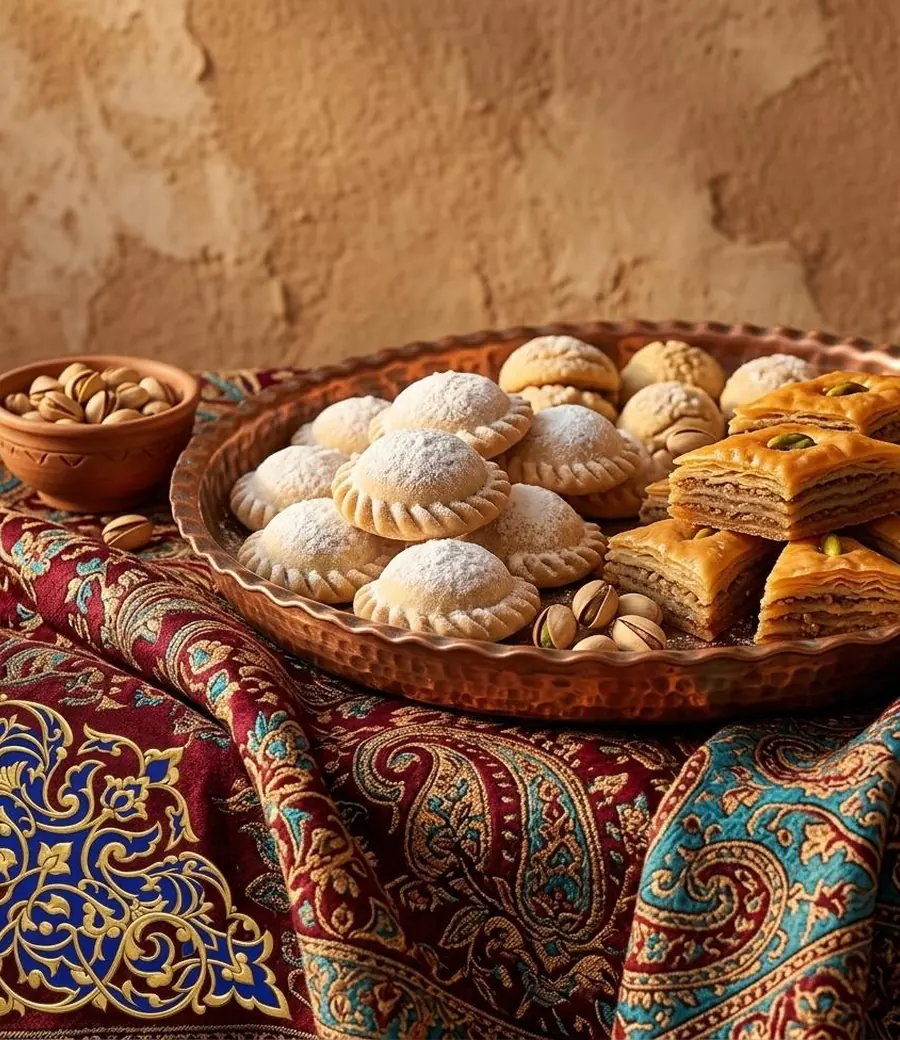
Official tourism information for Yazd lists a broad family of local sweets, including qottab, baklava, loz and haji badam. Qottab's powdered surface and filled structure can lose its presentation under pressure. Baklava needs a box that keeps pieces from sliding and compressing one another. Smaller dry sweets may divide more easily among colleagues or households, but their compact size is not a substitute for freshness.
Read the label for ingredients, production or best-before information and storage advice. Nuts, dairy ingredients or other allergens may matter to the recipient. Look for a clean package, a natural aroma and no unusual moisture, rancid smell or damaged seal. A luxury sleeve cannot restore stale, overheated or crushed sweets. If freshness is central, buy near the end of the visit rather than carrying the box through several hot days.
Think about delivery time. A mixed selection can be useful when every sweet remains identifiable and protected, while an oversized assortment may create empty movement and breakage. For a formal food gift, a moderate box of well-kept pieces usually looks more considered than a very large package whose contents arrive damaged.
Yazd termeh: buy a useful textile, not just a dense pattern
Termeh is one of the best-known textiles associated with Yazd. Its elaborate motifs and rich colors make it an obvious formal gift, yet surface drama can distract from construction. Inspect the consistency of the weave, pattern alignment, clean stitching, corners and edges. On a sewn product, check the lining and the way layers meet. Look at the reverse and the less visible details before deciding.
Choose the format for the recipient's home. A table runner, cushion cover or modest panel may be used more often than a large heavy cloth selected without measurements. Ask how the product should be cleaned and stored, and whether its stated materials are written on a label or receipt. A short card explaining the textile and Yazd is more useful than an oversized presentation case.
Handwork can include limited variation, but visible loose threads, distorted seams and poorly finished edges should not be praised automatically as authenticity. Compare pieces of a similar size and function. When price depends on particular fibers, a named workshop or special production, request information proportionate to that claim rather than relying on decorative vocabulary.
Meybod zilu: a restrained cotton weave with a desert logic
Visit Iran identifies Yazd and especially Meybod with zilu, a cotton flatweave connected to the climate and material culture of desert regions. Its geometric patterns and usually controlled palette distinguish it from many more colorful rugs. That restraint can work well in a contemporary interior, but the first decision remains size and use: floor, wall, bedside area, bench, bag or cushion.
Inspect the evenness of the weave, the clarity and rhythm of the pattern, the edges and the reverse. Ask about fiber, care and whether the item is intended for regular floor use or decoration. Natural variation may be part of a woven object, but unexplained weak areas and careless finishing are not automatically virtues. A general travel guide cannot appraise a particular textile.
For travelers, smaller zilu products can keep the design language while avoiding the weight and dimensions of a large floor covering. Measure rather than estimating. Keep the textile clean and dry, and roll or fold it in a way that avoids severe long-term creases. A compact item that fits the recipient's life is a stronger gift than a large object chosen mainly for visual impact.
Meybod pottery: inspect the object, then inspect the packing
Meybod is known for pottery and ceramics, with regional decorative motifs appearing on bowls, plates and other pieces. Begin with physical condition. Look for hairline cracks, chips, unstable bases, warped forms and rough areas that interfere with use. A small difference in a handmade surface may be expected; structural damage and poor balance are separate issues.
Ask whether the piece is decorative or intended for food use, and request clear care guidance. Do not infer food safety, dishwasher suitability or heat resistance from appearance alone. If these functions matter, rely on specific information from the producer or seller rather than a general statement that the glaze is traditional.
Packing determines whether the purchase succeeds. A small bowl, tile or plate is often more realistic than a multi-piece service. Use a soft first layer, a rigid outer box and fill that prevents any movement. Protect rims and handles from direct pressure. Before paying, consider the final package dimensions and whether it can travel in a cabin or checked bag under current carrier rules.
Use Yazd's old-city shops and workshops for comparison, not urgency
Official travel material presents the old city, markets, sweet-making and craft workshops as connected parts of exploring Yazd. This is useful because a buyer can see several production and retail contexts instead of judging from a single hotel gift display. Spend the beginning of a shopping walk learning the typical formats, packaging and finishes in one category.
For sweets, plan the main purchase near departure and compare freshness information. For termeh and zilu, compare like-sized objects and inspect stitching, reverse and care details. For pottery, make the seller demonstrate the final protective packing. Ask specific questions about material, production place, use and maintenance. Clear answers make comparison possible; “best in Yazd” does not.
Do not let a workshop setting become an automatic certificate. It offers useful context and sometimes direct information, but claims about maker, age or technique should still be proportionate and recorded when they influence price. A patient comparison lap is consistent with the city: the details become visible when you stop treating shopping as a race.
- Define the recipient, intended use, delivery time and luggage space first.
- Compare products of similar size, material and function.
- Read food labels and inspect textile backs, pottery bases and all edges.
- Ask for care and origin information when those claims affect value.
- Treat protective packing as part of the product, not a free afterthought.
Match a Yazd souvenir to the recipient
For a family gathering, a balanced box with two well-kept sweet types is more useful than a huge assortment. For colleagues, small sealed units or dry bite-sized sweets divide easily. For a formal host, a practical termeh runner or carefully finished textile can last beyond the meal. For a design enthusiast, zilu's geometry or one Meybod ceramic object may feel more distinctive.
For a minimalist home, reduce size, colors and ornament. For a child or teenager, avoid a heavy fragile ceramic and choose a small useful textile or an allergen-aware food gift. For an international recipient, a runner or compact weave usually consumes less space and carries less breakage risk than a large pottery service.
Add a short note naming the sweet or craft, its Yazd or Meybod connection and one serving or care instruction. Avoid inventing a maker's story, an authenticity certificate or claims about collectible value. The note should help the recipient use and understand the gift, not turn a tourism purchase into an unsupported appraisal.
Heat, pressure and impact are three different packing problems
Sweets need protection from heat and pressure. Keep boxes above heavy luggage, away from direct sun and out of a closed hot vehicle. Make sure qottab and baklava pieces cannot move freely inside the box. If a product has specific refrigeration or storage instructions, follow its label instead of assuming that every Yazd sweet travels the same way.
Termeh and zilu should remain clean and dry. Use a breathable protective layer where appropriate, avoid liquids and do not leave sharp folds under weight for a long period. Record dimensions and care instructions before removing retail labels. Ceramics require the opposite kind of protection: a soft contact layer, rigid box, filled empty space and special attention to rims, handles and protrusions.
Before leaving the seller, open or confirm the package and make sure the selected object is inside. Tilt a ceramic box gently; any movement means it needs more support. Keep receipts for meaningful purchases. Current airline and destination rules remain the traveler's responsibility, so verify them directly instead of treating packing advice as transport authorization.
Choose clear provenance without turning heritage into a sales guarantee
Yazd's World Heritage status and its living craft traditions provide important cultural context. They do not verify every sweet, textile or ceramic sold in the city. Ask practical provenance questions: Who produced it when known? Where was it made? What is the material? What process or intended use is being claimed? Keep written details when those answers influence the price.
Be cautious with absolute authenticity language and with stories that cannot be connected to the individual object. Visible workmanship, transparent information, useful dimensions, a price you understand and packing suited to the trip are safer criteria. If an attribution or claimed age makes a textile or ceramic substantially more expensive, independent specialist evidence may be appropriate.
The best Yazd souvenir does not need to be the largest or most ornate. It should fit the recipient, preserve a truthful connection to the city's food or craft traditions and arrive in a condition that allows it to be enjoyed. Restraint is not a compromise here; it is part of choosing well.
Frequently asked questions
What are the most famous souvenirs from Yazd?
Qottab and other Yazd sweets are widely recognized. Termeh, zilu and pottery or ceramics from Meybod are among the important lasting craft choices.
Which Yazd sweet is best for a long journey?
There is no universal answer; freshness, ingredients, storage and the strength of the box matter. Small dry sweets in rigid clean packaging may be easier to transport, and buying near departure helps.
What should I check when buying Yazd termeh?
Inspect weave consistency, pattern alignment, stitching, edges, lining and dimensions suited to a real use. Ask about materials and care, especially when those claims affect price.
How is zilu different from many rugs?
Zilu is generally a cotton flatweave associated with desert regions, using geometric patterns and a more restrained palette. Verify the particular item's fiber, construction, size and care rather than relying on the category name alone.
How should Meybod pottery be packed for travel?
Use a soft first layer, a rigid box and enough fill to stop all movement, with extra protection at rims and handles. Confirm intended use and current transport rules separately.
Sources and notes
The date beside a source is its recorded access date, not confirmation that the link works today or that the whole article has just been reviewed. The article’s update date is shown separately.
- Historic City of Yazd — UNESCO World Heritage Centre
Recorded source access: - Yazd Province — Visit Iran
Recorded source access: - Zilu of Yazd — Visit Iran
Recorded source access: - Exploring Yazd — Visit Iran
Recorded source access: