Quick takeaways
- Visit Iran identifies Reza Bazaar as a prominent Mashhad market where the city’s souvenirs are sold.
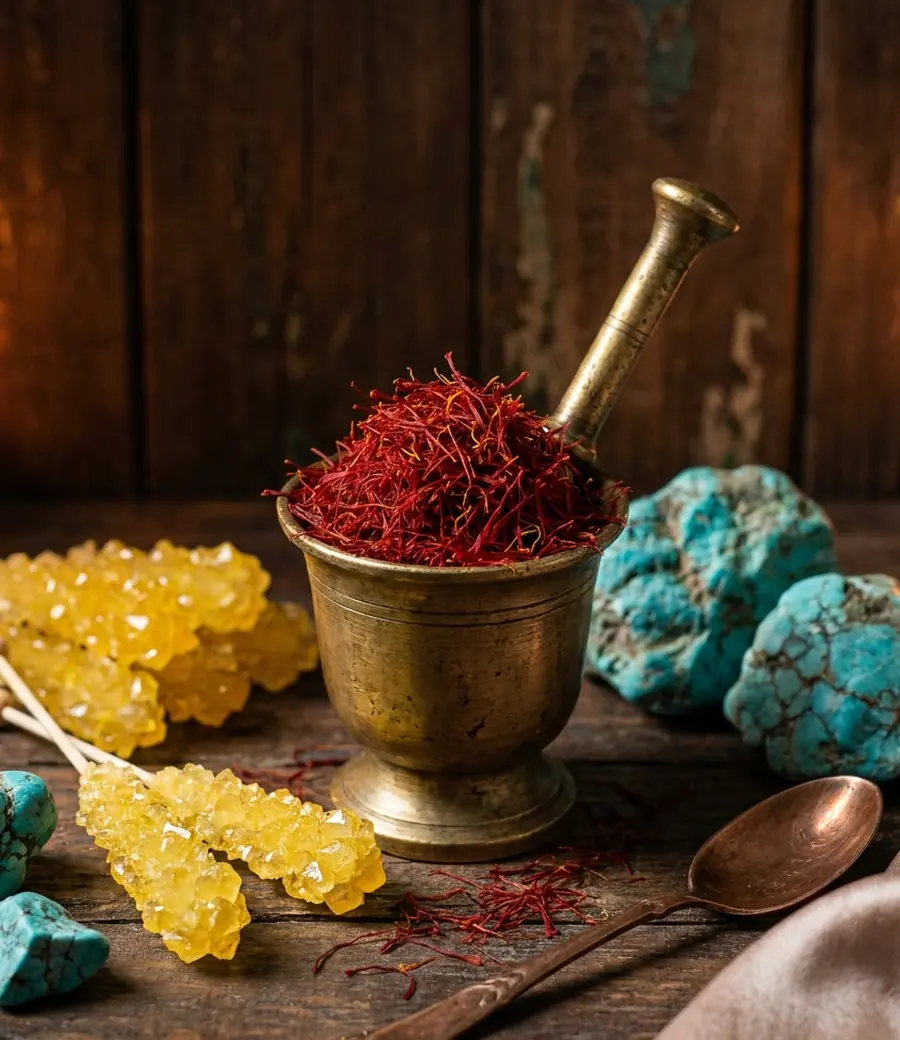
- Official tourism material associates Razavi Khorasan with saffron, barberries, turquoise and agate work, nabat, perfume and nuts.
- Divide the list into edible gifts, formal gifts and personal purchases; assign a budget and luggage allowance to each.
- For stones and jewellery, do not infer material, origin or value from appearance alone; ask for descriptions and documentation proportionate to the purchase.
Give Reza Bazaar a specific job in your Mashhad itinerary
Visit Iran places Reza Bazaar on the Imam Reza Street axis and presents it as one of Mashhad’s recognised markets for local souvenirs. Its connected sections and broad assortment make it a natural late-trip shopping stop for many visitors. That convenience is the reason to plan the visit, not a reason to treat every display as an urgent opportunity.
Before entering, write the recipients and three shopping categories: edible gifts, a formal or lasting gift, and something personal if the budget allows. Add maximum spend and packed weight. A short brief keeps a large box, a multi-pack offer or an attractive ring from consuming money and luggage meant for the rest of the list.
Build the route around recipients, budget and carry weight
Start with a viewing pass and note where your target categories appear. Do not buy the heaviest or most fragile item first. Food can wait until you understand the available pack sizes; jewellery can wait until you have seen comparable designs and received clear answers. This sequence reduces the chance that early purchases dictate every later decision.
For each recipient, define a useful quantity rather than an impressive box. A household may use barberries or nuts; a formal recipient may appreciate a compact saffron pack with clear information; a personal keepsake may be a small piece of jewellery. When the function is fixed, packaging and price become easier to judge.
Compare saffron with controlled variables
Compare packs of the same stated weight and broadly similar presentation. Check the seal, printed information, seller’s explanation and whether the quantity suits the recipient’s likely use. Strong colour, aroma or a dramatic sales claim is not enough on its own to establish grade, purity or value. This general guide cannot authenticate a particular pack.
For a formal gift, a smaller, well-presented quantity with legible product information can be preferable to a large decorative case with uncertain contents. Follow the producer’s storage guidance, and protect the pack from heat, moisture and crushing during the remaining journey. Keep invoices and labels for a significant or multiple-item purchase.
Treat barberries, nabat and nuts as different travel objects
For barberries, inspect package integrity, visible cleanliness, dryness and storage instructions. Nabat can fracture under pressure even when its box looks sturdy. Nuts require attention to pack condition and usable quantity. Do not assign one freshness test, shelf life or storage rule to every seller’s product; the specific label and product condition govern.
Compare three similar packs at most. Fix weight and use, then evaluate information, seal, protection and price. This avoids the fatigue of comparing a small household pouch with an elaborate corporate box. Place edible products away from metal or stone gifts, and never use delicate food boxes as a base layer in the suitcase.
Ask better questions about turquoise and jewellery
Official tourism material connects Razavi Khorasan with turquoise cutting and other stone work, but regional association does not authenticate an individual object. A non-specialist cannot reliably determine every treatment, origin or quality factor from a brief look. Set a firm budget first, then ask what the stone is described as, what metal is used, its weight, care needs and what can be written on the invoice.
If the price or provenance claim is substantial, ask for evidence proportionate to it and take time away from the counter. Do not let urgency replace verification. When the recipient’s taste is uncertain, a modest design and wearable size may be safer than a large statement piece. Confirm return or adjustment terms only if they are explicitly offered and recorded.
Compare no more than three genuinely similar options
Decision fatigue grows when ten unrelated products compete. For each category, compare up to three like-for-like options: saffron at the same stated weight, barberry packs for the same household use, or rings within one budget range. Record the price and key specification, and photograph only with permission.
Step away for several minutes after making a shortlist. If the preferred option still fits the recipient, budget and transport plan after that pause, the choice is less likely to be a reaction to display lighting or sales momentum. Walking away is not a failure; it is part of the comparison method.
Make a Mashhad gift box simple and usable
A coherent gift does not need six or seven items. Barberries with nabat or a restrained nuts selection can work for a household. Saffron plus one complementary edible can serve a formal context. If adding a lasting object, wrap stone or metal separately so it cannot press against food.
Balance the box cost against the contents. Heavy wood, oversized cavities and decorative layers may consume budget and shipping allowance without improving the product. For several recipients or an organisational order, calculate the final dimensions, unit consistency and total transport cost before approving packaging.
Pack for the rest of the day and the full journey
Before paying, explain whether the purchase will spend hours in a warm car, move by train or plane, or enter checked baggage. Follow product labels and current carrier or destination rules. A seller’s familiarity with travellers is helpful context, not official customs or airline clearance.
Keep jewellery in a small protected compartment; secure food seals; place nabat and fragile packs above dense items; and prevent hard objects from sliding. If the day ahead is long and hot, delay food purchases. The best souvenir is not merely attractive at the counter—it arrives with its seal, form and intended use intact.
Complete a two-minute exit check
Count the packages, verify stated weights where shown, inspect seals and boxes, and match important invoice details to the item. Confirm that a stone or jewellery description promised in writing is actually present. Resolve visible packing problems before leaving, when correction is still practical.
Ask whether every item has a recipient, an understandable reason for selection and a protected place in the luggage. If one package exists only because it looked like a bargain, reconsider it. Three deliberate parcels are often a better record of Reza Bazaar than ten bags with no clear destination.
Frequently asked questions
What souvenirs can I find at Reza Bazaar?
The market is known for Mashhad souvenirs, while official tourism material associates Razavi Khorasan with saffron, barberries, nabat, nuts, perfumes and stone work including turquoise and agate.
How should I compare saffron packs?
Compare packs with the same stated weight, inspect the seal and product information, and choose a usable quantity. Do not rely on one visual or aromatic cue, or on a broad verbal claim.
How can a non-specialist approach turquoise?
Set a budget, ask for the stone description, metal, weight and care needs, and request proportionate written evidence for important origin or quality claims. Appearance alone is insufficient.
How many products belong in a Mashhad gift box?
Usually two or three compatible, useful products are clearer than a crowded box. Prioritise product quality, recipient needs, final weight and protection over package volume.
When should I buy edible gifts during the visit?
Buy them late enough to minimise heat, pressure and unnecessary carrying. Follow the label, and separate fragile foods from heavy jewellery or stone packages.
Sources and notes
The date beside a source is its recorded access date, not confirmation that the link works today or that the whole article has just been reviewed. The article’s update date is shown separately.
- Reza Bazaar — Visit Iran
Recorded source access: - Razavi Khorasan Province — Visit Iran
Recorded source access: