Quick takeaways
- Saffron and barberries are major products associated with Razavi Khorasan; traceable product information matters more than an ornate gift box.
- Rock candy and nuts work for several modest gifts, but freshness, allergens and clean sealed packaging still need attention.
- Turquoise and agate require questions about the stone, possible treatment, setting metal, workmanship and written receipt—especially at higher prices.
- Reza Bazaar offers useful range and comparison; a famous location does not place every food, stone or keepsake in the same quality tier.
What should you buy in Mashhad?
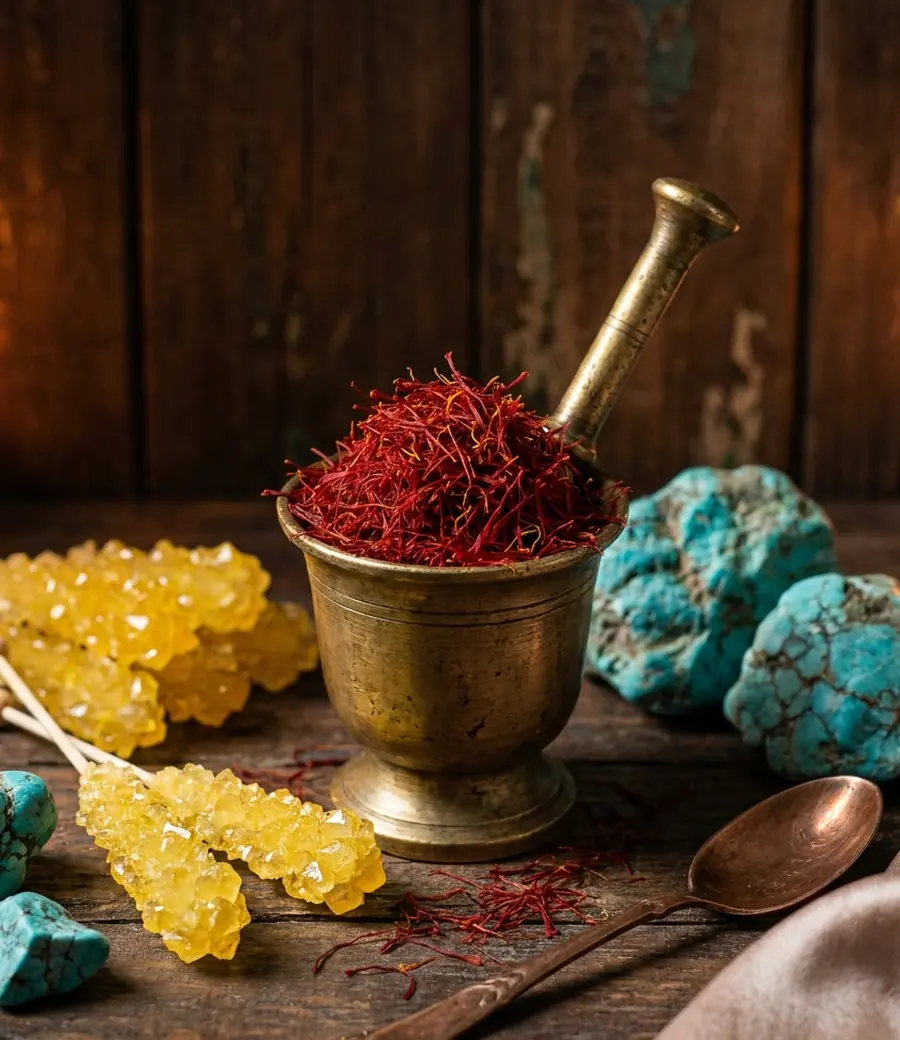
For a compact formal gift, saffron is usually the clearest starting point: it is light, useful in cooking and strongly connected with Khorasan. For a family kitchen, barberries add a regional ingredient that can be used rather than displayed. Rock candy and sealed nuts suit colleagues or a larger list of recipients. A small turquoise or agate piece can become a lasting personal gift when the recipient wears jewellery and the seller gives clear information. A pilgrimage keepsake should be chosen for meaning, not merely because it is inexpensive.
Mashhad's market is unusually broad because the city serves residents, domestic travelers and a large pilgrimage audience. Official provincial tourism information lists saffron, barberries, dried foods, rock candy, perfume and gemstone work among the region's products. Those categories should not be assessed with one generic idea of authenticity. Food demands labeling, freshness and storage care; a set stone demands questions about material and construction; a devotional object demands sensitivity to the recipient.
Before shopping, define four limits: recipient, intended use, luggage space and a price you understand. This protects against two common mistakes—buying a luxurious box with little product information, or accumulating many low-use objects because each one seemed inexpensive. A smaller purchase that can be explained and used is usually the stronger souvenir.
| Souvenir | Best use | Most important checks |
|---|---|---|
| Saffron | Formal gift, cook, international traveler | Net weight, producer, seal, traceability, storage and intact threads |
| Barberries | Family kitchen and food-focused recipient | Dryness, clean condition, natural appearance, seal and storage |
| Rock candy or nuts | Hosts, colleagues and multiple recipients | Freshness, ingredients, allergens and crush-resistant packaging |
| Turquoise or agate | Personal, lasting jewellery gift | Stone description, treatment disclosure, setting metal, finish and receipt |
| Pilgrimage keepsake | Recipient who values its meaning | Relevance, workmanship, accurate claims and respectful presentation |
Buying Mashhad saffron without treating the box as evidence
Saffron combines high value with very low weight, which makes it attractive for travel and gifting. FAO material on Iran's saffron value chain emphasizes quality integrity and the importance of Khorasan production. For an ordinary buyer, the safest translation of that context is simple: choose sealed packaging with a stated net weight, producer details, date or lot information when available, and clear storage instructions. A metallic case or elaborate sleeve does not replace those facts.
Deep red color alone cannot prove quality. Look at the condition and relative consistency of the threads, note the aroma and avoid packages with obvious foreign matter, but remember that professional grading requires standard testing. Be cautious with instant home tests that promise certainty. When the purchase is expensive or intended for several formal gifts, traceability and a reliable written invoice matter more than a seller's dramatic claim.
Small sealed units are often more useful than one large container. They allow several recipients to keep the spice closed until needed and reduce repeated exposure to air, light and humidity. Match quantity to real culinary use. A clear card can briefly explain that saffron is used in Persian rice, sweets and drinks without making medical claims or promising a particular grade you cannot verify.
Barberries, rock candy and nuts: easier gifts still need a checklist
Barberries are closely associated with Khorasan and are practical for a recipient who cooks Persian food. Inspect the product through transparent packaging when possible. It should look dry and clean, without obvious moisture, unpleasant odor or debris. Extremely artificial-looking color is not a quality shortcut. A sealed package protects the berries from dust and humidity and lets the recipient retain the label and storage guidance.
Rock candy, or nabat, is familiar, shareable and relatively low risk, but it breaks easily. Choose clean pieces in a rigid package if the gift will travel. Nuts and dried fruit are also convenient for multiple households; check freshness, the condition of kernels, ingredient information and allergen relevance. A decorative mixed box is only useful if the foods inside remain identifiable and protected.
Consider the recipient's diet. A person limiting sugar may value saffron or unsweetened dried foods more than rock candy. Someone with nut allergies should not receive an unlabelled mixture. These are not minor details: adapting the category to the recipient is what turns a routine market purchase into a thoughtful Mashhad gift.
Turquoise and agate: ask what the appearance cannot answer
Mashhad has an important market for cutting and setting gemstones, and Visit Iran describes local mekhraj-kari—the craft of setting stones in metal—alongside the popularity of turquoise and agate. Similar-looking pieces can differ substantially in stone, treatment, setting and finish. Ask whether the stone is natural, treated, reconstructed or synthetic; what origin is being claimed; what metal the setting uses; and what the written return or guarantee terms actually cover.
Inspect the setting as an object, not just the colorful stone. The stone should sit securely, the prongs or bezel should not catch sharply, the interior should feel finished and the ring size or pendant hardware should suit the recipient. A large stone and a heavy setting do not automatically mean better quality. For a non-specialist, a modest well-made piece with a clear description is safer than an expensive decision based only on a story.
If rarity, age, mine origin or a named artisan materially increases the price, request documentation proportionate to the claim and consider independent expertise. A tourism guide cannot authenticate or appraise an individual gem. Keep an itemized receipt that records the stated stone and metal rather than a generic total. This also helps the recipient understand what was given.
Pilgrimage gifts: choose meaning over quantity
For many visitors, shopping in Mashhad continues the emotional and spiritual experience of the journey. A devotional keepsake may matter deeply to a family member who asked for it, while the same object may not suit another recipient. Begin with what the person values. One carefully selected item with a short, respectful note is often more meaningful than a bag of anonymous objects bought because each was cheap.
Avoid treating a commercial claim about sanctity, material or origin as automatically verified. Judge tangible workmanship and ask what is actually being sold. Do not invent a religious provenance or attach claims that the product itself cannot support. When the recipient has a different belief or simply prefers practical gifts, saffron, barberries or a neutral regional craft may be the more considerate choice.
The same rule applies to corporate gifting. Pilgrimage symbolism should never be assumed appropriate for every client or colleague. A food gift with clear regional context may travel across personal preferences more gracefully. Respect for the recipient is part of the editorial and commercial integrity of a souvenir recommendation.
How to shop Reza Bazaar as a comparison exercise
Official tourism material identifies Reza Bazaar as a recognized place for souvenirs in Mashhad. Its practical advantage is concentration: saffron, dried foods, perfume, stones and keepsakes can be encountered along one shopping route. Use that range to learn before committing. Compare a few products of the same type and net weight, not a small plain package with a large luxury presentation that contains a different quantity.
For saffron, read net weight, producer and labeling. For barberries or nuts, inspect seal and storage condition. For jewellery, ask for stone and metal details and an itemized receipt. For keepsakes, check finish and relevance rather than counting how many fit a budget. Specific questions create comparable answers; “best quality” does not.
Crowded surroundings and an extensive list of recipients can make purchases reactive. Write a short list before entering: recipient, category, maximum size and budget. Complete a comparison lap, then return to the option that remains sensible. The bazaar gives access to choice, but the quality of the decision still belongs to the buyer.
- Compare the same category, net weight, material and intended use.
- Read sealed-product labels before evaluating gift-box appearance.
- Inspect backs, clasps, settings and edges on stone jewellery.
- Ask for an itemized receipt when a claim materially affects price.
- Keep food, fragile candy and jewellery in separate protective layers.
Match the Mashhad souvenir to its recipient
For a family, a practical combination is a modest amount of saffron with sealed barberries or nuts. For a cook, prioritize usable ingredients over a complex presentation box. For colleagues, individually packed rock candy or small sealed food units are easier to distribute. For a formal host, saffron with clear product information and restrained presentation can be professional without becoming oversized.
Gemstone jewellery is more personal. Ring size, metal preference, color and the recipient's willingness to wear a devotional or decorative piece all matter. If these are unknown, a stone object is not automatically a safe premium gift. A small food product may carry less risk and more immediate use. For a recipient who specifically values a pilgrimage memory, one relevant keepsake can be the right answer.
For an international recipient, explain the product briefly: its name, connection with Khorasan or Mashhad, intended use and one care instruction. Do not promise customs clearance, medical benefit, gem value or investment return. A truthful card makes the gift more accessible without turning a cultural introduction into an unsupported certificate.
Pack saffron, dried foods, rock candy and jewellery differently
Keep saffron away from strong light, heat and moisture. Leave sealed units closed until needed and protect small boxes from being flattened. Barberries, nuts and other dried foods need dry, sealed packaging and should not remain in a hot vehicle. Rock candy is brittle, so it needs a rigid container and a place above heavy luggage.
Store jewellery separately from hard objects that could scratch the stone or metal. A small padded box should prevent movement and pressure on a ring or pendant. Keep receipts and descriptions with you rather than inside a checked bag when the purchase has meaningful value. Before leaving the seller, confirm the packed item is the one you examined.
Food-import and plant-product rules vary between countries and can change. Check current destination and airline requirements directly before an international trip. Advice from a seller or a general article is not customs authorization. When entry rules are uncertain, choose a smaller, clearly labeled commercial package or a non-food alternative rather than guessing.
Use traceability and restraint instead of authenticity theatre
Across categories, the safest signals are ordinary: a clear label, specific answers, visible workmanship, an itemized receipt and a product suited to real use. A famous city, pilgrimage setting, luxury box or traditional motif offers context but does not verify every commercial claim. Ask what can be documented and describe only what you know.
Reject shortcuts that promise certainty from color alone, a quick burning test, a dramatic gemstone story or an undefined “blessed” label. Professional saffron testing and gem identification require appropriate expertise. A responsible guide helps you recognize the limits of casual inspection rather than disguising them.
The best Mashhad souvenir is the one that fits the recipient, survives the journey and carries a credible connection to Khorasan or the pilgrimage experience. Buying fewer items with stronger information and better protection respects the producer, the recipient and your own budget.
Frequently asked questions
What are the most famous souvenirs from Mashhad?
Saffron and barberries are major Khorasan products. Rock candy, nuts, perfumes, turquoise, agate and pilgrimage keepsakes are also widely sold, but each category needs different quality checks.
Is color enough to identify good saffron?
No. Thread condition, aroma, consistency, producer information, seal and traceability all matter, while professional grade and purity assessment requires standardized testing.
What should I ask when buying turquoise or agate in Mashhad?
Ask whether the stone is natural, treated, reconstructed or synthetic; what origin is claimed; what metal and setting are used; and what the itemized receipt and return terms record.
Is Reza Bazaar a good place for Mashhad souvenirs?
It is useful for range and comparison, but its reputation does not guarantee every product. Compare like-for-like items and apply the appropriate food, jewellery or workmanship checks.
Can I take saffron and barberries abroad?
Rules differ by destination and may change. Check the current airline, customs and plant or food import requirements directly; a legal purchase in Iran is not automatic permission to import it elsewhere.
Sources and notes
The date beside a source is its recorded access date, not confirmation that the link works today or that the whole article has just been reviewed. The article’s update date is shown separately.
- Razavi Khorasan Province — Visit Iran
Recorded source access: - Reza Bazaar — Visit Iran
Recorded source access: - Mekhraj Kari of Mashhad — Visit Iran
Recorded source access: - FAO and Iran: quality integrity in saffron value chain — FAO
Recorded source access: