Quick takeaways
- ISO 3632 points to controlled testing, not a one-step home trick.
- Threads expose more structure than powder but do not prove purity alone.
- Batch, producer, dates, net weight and seal are core buying evidence.
- Protect saffron from light, heat, air, moisture and strong odors.
Why saffron needs a cautious buying method
Saffron is light, valuable and easy to repackage, so a small visual difference can carry a large price claim. The ordinary traveler cannot verify every chemical or geographic claim at a counter. A safer purchase combines a traceable producer, intact package, clear batch and date information, declared net weight, realistic quality language and a seller who will put important statements in writing.
Begin with purpose. A small sealed thread package suits a formal gift; a larger culinary pack suits someone who cooks often. Do not buy more than the recipient can store well. Compare total net weight rather than box size, and include the cost of protective packaging in the real price.
Because saffron’s cost is concentrated in a few grams, calculate price per gram from the declared net weight and compare like with like. A heavy decorative case can distort intuition. If a promotion combines several tiny containers, add their saffron weights rather than counting packages. Keep presentation secondary to traceability and protection.
What ISO 3632 can and cannot tell a shopper
ISO 3632 provides a technical framework for saffron specification and testing. Its existence is a reminder that professional classification depends on controlled methods, not a single kitchen trick or the seller’s confidence. A label claiming a class or compliance should identify who tested the batch and provide enough traceability to make the claim meaningful.
The standard does not personally certify every retail pack, and reading its number on a box is not the same as seeing a valid test result for that batch. Ask for the producer, batch or lot, test body and date when the classification materially affects price. Treat missing evidence as uncertainty, not automatic proof of fraud.
Standards are often updated, and laboratories may report different measured attributes within a defined framework. A buyer does not need to become a chemist, but should recognize the difference between a named test result and a generic quality slogan. If a seller cites a certificate, check that product, lot and date connect to the pack offered.
What can be observed in saffron threads
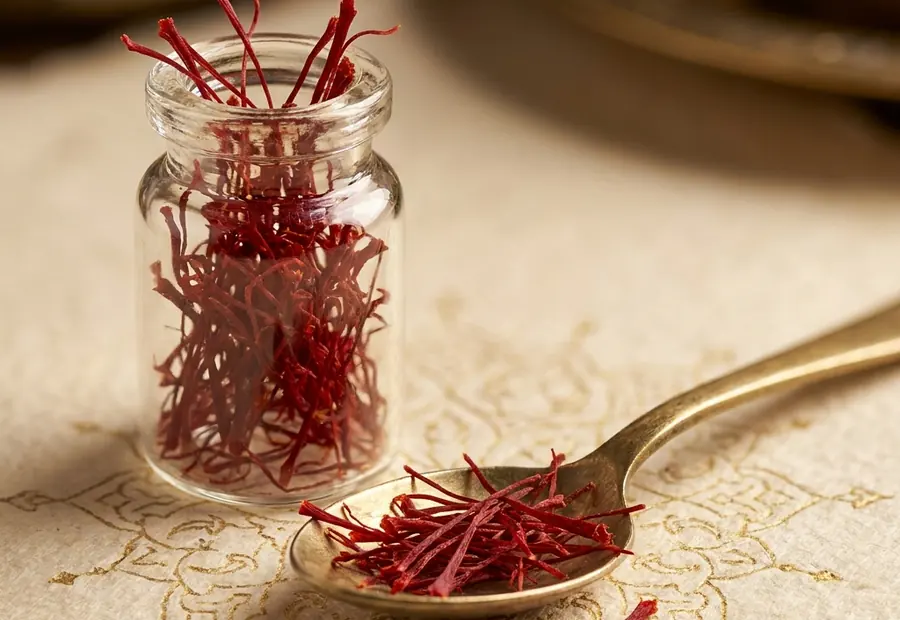
Threads allow more visual inspection than powder. Look for a reasonably consistent product, limited dust, no obvious foreign plant matter, and a dry package without condensation. Color and shape vary, so a photograph or one “perfect” thread is not a universal authenticity rule. Aroma can add context, but storage, temperature and added scent can influence it.
Do not crush, burn or chemically treat stock in a shop. Such demonstrations can contaminate food, damage merchandise and produce ambiguous results. Observation helps reject obvious problems; it cannot replace laboratory analysis for purity, coloring matter, moisture or strength.
Very uniform long red threads may look appealing, while mixed shapes may reflect cutting and handling; neither visual pattern alone settles authenticity. Also avoid the myth that yellow portions or a particular hue always decide quality. Product categories and grading language should come from documented specifications rather than a social-media photo chart.
Why popular home authenticity tests mislead
Internet tests based on water color, rubbing, taste, burning or baking soda often reduce a complex product to one dramatic sign. Genuine saffron can behave differently with water temperature, dose, age and processing, while adulterated material may be designed to imitate the expected reaction. A single test therefore creates false confidence in both directions.
Use home brewing to learn whether you enjoy the purchased spice, not to issue a scientific certificate. If a commercial dispute depends on adulteration, preserve the sealed package, receipt and batch details and use an appropriate accredited testing or consumer-protection route.
Many demonstrations omit controls: they do not compare equal weights, temperatures or times, and observers already know which sample the seller favors. This makes the performance persuasive but not diagnostic. Repeated stories about an instant test should therefore prompt better documentation, not replace it.
Threads or powder?
Whole or cut threads are usually the lower-information-risk choice for travelers because structure remains visible and the product is harder to disguise than a homogeneous powder. Powder is convenient for recipes and can be legitimate, but it places more trust in the producer, milling controls and package traceability.
If choosing powder, prefer a sealed pack from a clearly identified producer and avoid loose anonymous product. Do not assume that very dark powder is stronger. For gifts, small separate packs protect unused portions and let the recipient open only what is needed.
Ground saffron also loses aroma more quickly because more surface is exposed. If convenience matters, select smaller sealed units and mark the opening date. A recipient who owns a mortar can grind threads shortly before use, preserving more control over quantity and reducing the need for an anonymous powder.
Read the package as evidence
Useful fields include product name, producer and contact information, country or stated origin, net weight, batch or lot, packing or production date, best-before date, storage instructions and any certification or test reference. Ingredient lists matter for blends. The package should be food grade, sealed and sized to reduce air, light and moisture exposure.
Decorative metal or glass can protect and present the product, but the inner seal remains essential. Compare the net saffron weight, not the container’s heft. Photograph or retain the label if the outer box will be discarded.
Check whether a transparent display box exposes the spice to prolonged light. An attractive window can help inspection at purchase, but long storage may be better in an opaque secondary container while the original label remains attached. Tamper evidence should be intact and the package should not contain unexplained moisture or loose dye.
Storage and travel
Saffron should be protected from light, heat, air, moisture and strong odors. Keep the inner package closed, place it in a rigid secondary container and avoid repeatedly opening it for inspection. In luggage, separate it from perfume and humid items. After arrival, follow the producer’s instructions and use clean dry utensils.
For international travel, verify current airline, customs and food-entry rules for the destination. Small commercial packages are often easier to explain than unlabelled loose spice, but no article or shop can guarantee border admission. Keep the receipt and original label accessible.
During travel, avoid repeatedly moving saffron between containers; every transfer increases exposure and weakens traceability. If security inspection requires opening, keep the original inner pack and receipt together. At home, do not store the spice above a stove or next to a kettle where heat and steam fluctuate.
Choose gift size and presentation honestly
A modest quantity can flavor many dishes, so a small pack is not automatically ungenerous. Match size to the recipient’s cooking habits and explain basic use without medical promises. A gift card can state the producer, batch, packing date and storage method along with a cautious starting dose for cooking if supplied by the producer.
Do not advertise saffron as a treatment, guaranteed premium grade or investment. Separate sensory enjoyment and cultural context from health, laboratory and financial claims. The strongest gift is one the recipient can trace, store and use.
For a formal gift, one or more small sealed packs can look restrained and protect freshness. Include a simple culinary note such as crushing a small amount and infusing according to a trusted recipe, but avoid universal dosing because dishes and products vary. The producer’s instructions take precedence.
Stop signs and final checklist
Pause when a seller refuses a receipt, the seal is broken, dates or net weight are absent, a classification lacks batch evidence, or urgency replaces explanation. Extreme cheapness or price alone cannot diagnose authenticity, but unexplained inconsistencies deserve another option.
Before paying confirm purpose, thread or powder form, producer, net weight, batch, dates, seal, storage, quality evidence, total price and destination rules. Retain the package and receipt until the gift is used.
If a seller offers a refund or laboratory guarantee, obtain the conditions, time limit, acceptable sample and responsible organization in writing. Do not consume or discard all of a disputed product before preserving evidence. A clear remedy is valuable, but it still does not justify a medical or investment claim.
Frequently asked questions
Can water tests prove saffron is genuine?
No single home test can certify purity. Controlled laboratory methods are needed for professional claims.
Are threads safer to buy than powder?
Threads reveal more structure and are generally lower risk for travelers, but producer and batch traceability still matter.
What should a saffron label show?
Producer, net weight, batch, packing and best-before dates, storage and any meaningful test reference.
How should saffron be stored?
Sealed, cool, dry, dark and away from strong odors, following the producer’s instructions.
Can saffron be carried internationally?
Rules vary by destination and carrier. Keep the commercial label and check current requirements before travel.
Sources and notes
The date beside a source is its recorded access date, not confirmation that the link works today or that the whole article has just been reviewed. The article’s update date is shown separately.
- ISO 3632-1:2025 — Spices — Saffron — Specification — International Organization for Standardization
Recorded source access: - FAO signs agreement with Mashhad University to advance saffron authenticity testing methodologies — FAO
Recorded source access: - Razavi Khorasan Province — Visit Iran
Recorded source access: