Quick takeaways
- Embroidery is the most travel-friendly craft when stitching and construction are checked.
- Kalpurgan heritage does not automatically establish food safety for each vessel.
- Plant-fiber crafts must be dry, stable and protected from crushing.
- Dates require intact labels, cool handling and destination-rule checks.
Choose a gift by use, maker and journey
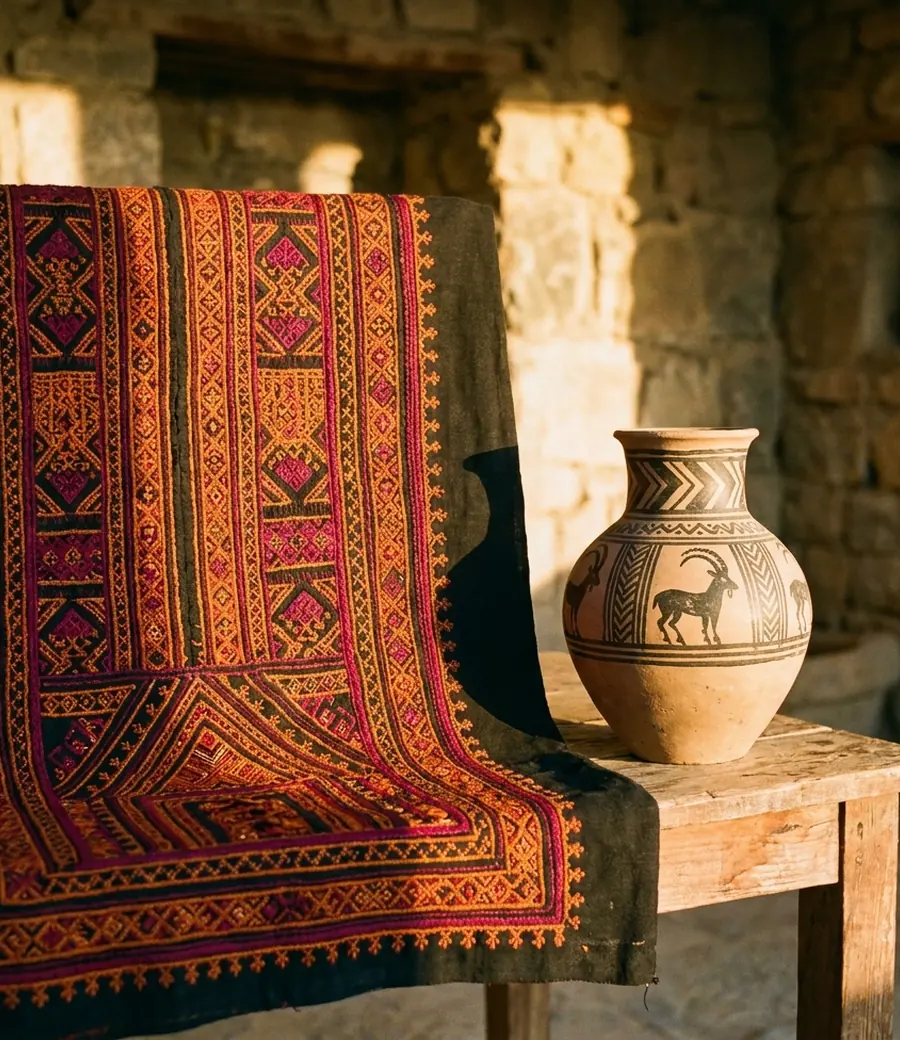
Embroidery is the most flexible choice because a panel, pouch or garment detail can be light and personal. Kalpurgan pottery carries a strong place-based story but is fragile and its intended use must be clear. Palm-fiber baskets can be practical if dry and stable, while dates suit shared gifting only when labels, seals and destination rules are reliable.
Start with the recipient and route. A durable desk textile may suit an international colleague better than a large garment requiring size knowledge. A small decorative vessel may travel more safely than tableware. The best gift is not necessarily the most famous category; it is the object whose maker, material, condition, care and transport you understand.
Set a packed-size ceiling before shopping. Pottery consumes protective space; dates add weight; textiles are flexible but should not be sharply folded. If buying several gifts, assign each a purpose and recipient. This keeps the batch coherent and avoids treating regional identity as a reason to buy objects that nobody can use.
Baluchi embroidery: read visible workmanship
Examine the front and reverse in good light. Look for stable thread tension, secured ends, clean edges and a base cloth suitable for the object’s purpose. Dense stitching can require substantial labor, but density alone does not prove age, maker or price. Ask whether the embroidery is hand worked, machine assisted or assembled from an older panel, and request a written description when that distinction affects the purchase.
Choose function before motif. A framed panel, bag insert or small accessory is easier to fit than a garment. Check closures, lining and stress points separately from decorative stitching. Natural variation can show handwork; loose threads, stains and weak construction are condition issues, not evidence of authenticity.
Compare the embroidered object at arm’s length and close up. The overall composition should make sense, while the close view reveals thread security and finishing. Ask how long the object has been in the shop and how it was stored. Sun fading, damp storage or insect activity are condition questions even when stitching remains attractive.
Ask about attribution without inventing a story
If buying from a maker, let the person describe the technique, materials and time involved. Ask permission before photographing. If buying through a retailer, ask what is known about the workshop or community and what is only assumed. A seller who cannot name a maker may still sell a good object, but the label should not become more specific than the evidence.
Record names and places accurately, including spelling. Do not assign a tribal, ceremonial or family meaning to a motif without a reliable source or the maker’s own explanation. Honest attribution respects living craft better than a romantic story created for a tourist.
Translation can distort names, so ask the maker or seller to write the preferred local or Persian name if possible. Keep that spelling on the gift card rather than guessing a foreign equivalent. When a source uses a broad provincial category, do not narrow it to a village or community without evidence.
Kalpurgan pottery: separate heritage from function
Official tourism material documents Kalpurgan pottery as a distinctive regional craft. That context does not make every vessel food safe, watertight or suitable for heat. Ask whether the piece is decorative or functional, what clay and surface treatment were used, and whether the maker provides any specific care guidance. When uncertain, use it for dry display rather than food or drink.
Inspect the rim, base and walls under even light. Fine surface variation may be normal, but active cracks, unstable bases, flaking and concealed repairs matter. Tap tests and aggressive rubbing can damage work and should not replace the maker’s information. Photograph condition before packing.
Ask whether the pottery was fired for the intended function and whether water contact changes the surface. Do not place an unverified vessel in a microwave, oven or dishwasher. A small stand can let a decorative piece be displayed safely. Include care instructions so the recipient does not infer kitchen use from bowl-like form.
Palm weaving and plant-fiber crafts
Baskets, trays and small mats can be lightweight, useful souvenirs. Check that fibers are dry, the weave is firm, ends are tucked and handles are attached where load concentrates. Set a basket on a flat surface and test only within its intended use. A fresh or earthy scent differs from dampness or mold; reject pieces that feel wet or unstable.
Ask how to clean and store the object. Plant fibers generally need protection from persistent moisture and strong compression. Choose a form that can nest around clothes or other gifts in luggage, but do not deform it simply to save space.
Measure basket openings and bases rather than trusting visual size. A tray should sit without rocking and a handle should bear only its stated load. For natural fibers, slight color variation can be normal. Strong chemical odor, active shedding or hidden wire ends require clarification before the object becomes a household gift.
Dates and edible gifts
For dates, prioritize an intact food-grade package, producer identification, ingredients when filled or flavored, net weight, packing or production date, storage instructions and best-before information. Appearance through a window is useful, yet it cannot establish storage history. Avoid condensation, torn seals, leakage or an unexplained fermented odor.
Heat and pressure shorten the safe, pleasant travel chain. Keep packages cool and separate from textiles and pottery. Verify current airline and destination food-entry rules. A retailer’s experience with other travelers is not an official customs decision.
Choose sealed date packs sized for timely consumption. If the product is stuffed or coated, allergens and ingredients become more important. Keep the package receipt and batch information. Once opened, follow the manufacturer’s storage direction rather than a general rule remembered from another type of date.
Pay fairly and keep the transaction traceable
Respect for craft includes allowing time for explanation and avoiding bargaining that dismisses labor. It also includes clear consumer questions. Confirm the exact item, material, condition, included packaging, total price and delivery terms. For commissioned work, record dimensions, colors, deposit, completion date and who approves changes.
Keep a receipt and any maker card with the object. Paid claims about age, rare materials or guaranteed authenticity require more than confidence. If documentation is missing, describe the gift modestly as a contemporary regional-style object rather than upgrading uncertainty into fact.
If shipping is arranged, write down the final recipient, declared contents, carrier, tracking, insurance and who handles customs questions. Do not let a gift disappear into an informal delivery chain without proof. A maker’s fair payment and a buyer’s traceable transaction can coexist; neither requires exaggerating the object.
Pack by material
Place embroidery in clean acid-free tissue or an inert breathable layer, avoiding sharp folds across dense stitched areas. Support pottery inside a rigid box with cushioning on every side and no direct contact with heavy items. Keep plant fibers dry and protected from crushing. Seal dates separately so oils, sugar and odor cannot reach crafts.
Carry documentation and photographs separately. On arrival, unpack promptly, inspect for movement or moisture and follow the maker’s care advice. Travel packing protects condition; it does not prove provenance.
Use a box-in-box method for fragile pottery when luggage conditions are uncertain, ensuring cushioning prevents movement without pressing delicate rims. Keep embroidery above possible liquid leaks. Do not wrap a damp basket tightly in plastic. Mark fragile parcels according to the carrier’s accepted procedure, not with improvised labels alone.
Final decision checklist
Confirm recipient, practical use, material, maker or retailer, condition, care, dimensions, price, packaging and destination rules. Compare at least two realistic options when possible. Pause if the seller prevents inspection, changes the material description or turns an unverifiable claim into urgency.
A strong souvenir supports both the recipient and the person who made or sold it responsibly. Choose a piece you can explain truthfully in one short card: where it came from, what it is made of, who made it when known, and how to care for it.
After choosing, explain the gift in four truthful lines: region, object, material and maker when known. Add one care line. This is enough to preserve context without turning the recipient’s first encounter into a lecture. It also exposes any gap: if you cannot state the material or use confidently, ask again before paying.
Frequently asked questions
What is the easiest Baluchistan souvenir to carry?
A small embroidered panel or pouch is usually lighter and less fragile than pottery, provided its construction is sound.
Is every Kalpurgan-style pot food safe?
No. Ask the maker about intended use and treatment; when uncertain, keep the piece for dry display.
How can I respect the maker?
Ask permission before photos, listen to the process, record attribution accurately and avoid bargaining that dismisses labor.
Can I travel internationally with dates?
Rules vary. Keep the original label and verify current airline, customs and food-entry requirements.
What should a craft receipt include?
Material, dimensions, condition, maker or workshop when known, retailer, price and any promised service.
Sources and notes
The date beside a source is its recorded access date, not confirmation that the link works today or that the whole article has just been reviewed. The article’s update date is shown separately.
- Sistan & Baluchestan Province Handicrafts — Visit Iran
Recorded source access: - Kalpurgan Pottery — Visit Iran
Recorded source access: - Sistan and Baluchestan Province — Visit Iran
Recorded source access: