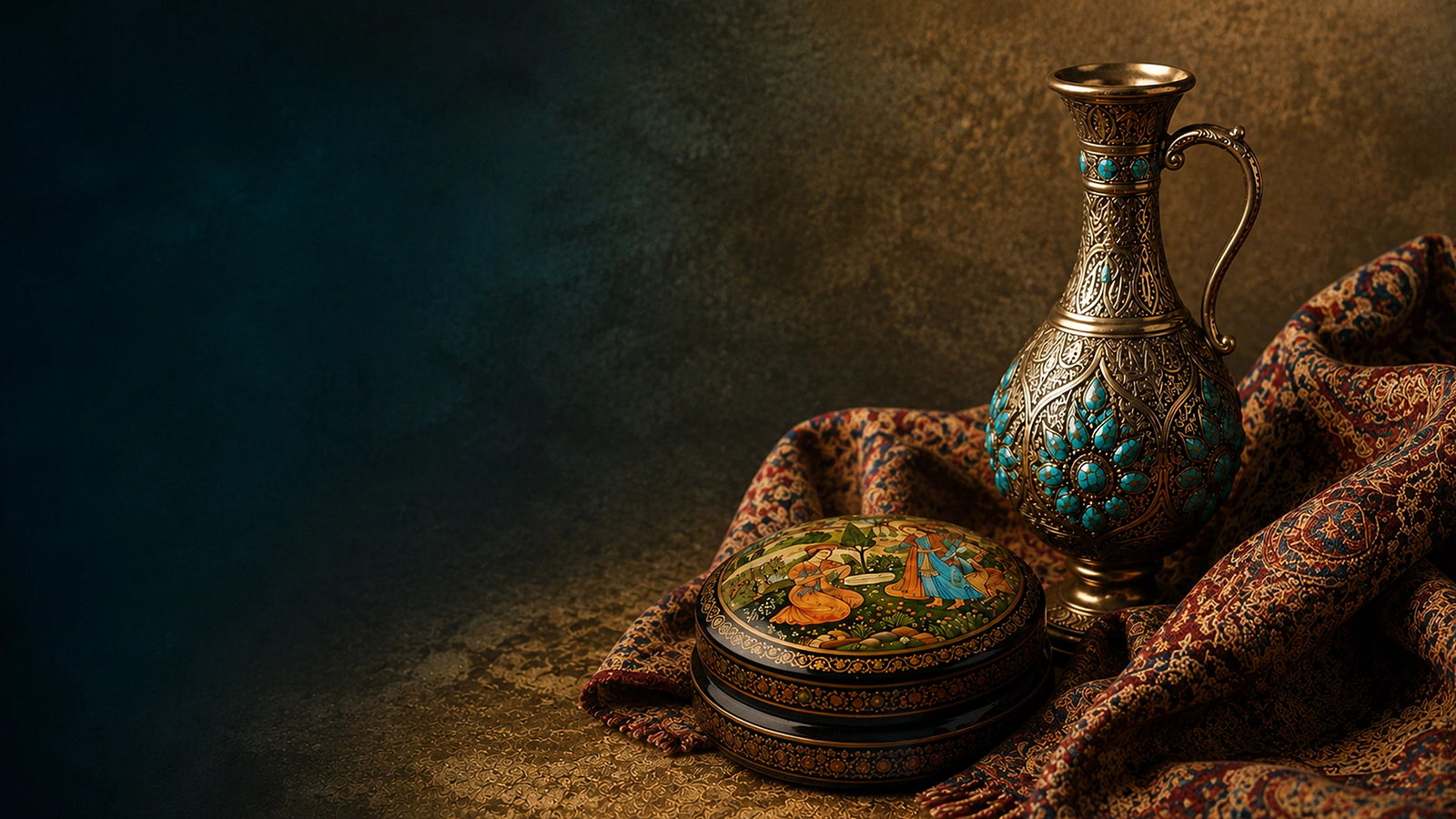
Quick takeaways
- Tea and Lahijan cookies form a recognizable, compact base for a regional gift.
- Dry, sealed foods are generally simpler to pack than liquids or highly perishable items.
- A gift box should control movement and pressure while keeping tea dry and away from strong odors.
- For formal gifting, clear product information and restrained presentation usually outperform unnecessary bulk.
Use a three-part formula: drink, edible, keepsake
Start with one traceable tea, one packaged dry edible such as Lahijan cookies, and optionally one compact craft or useful keepsake. This gives the recipient something to drink, something to share and—if appropriate—something to keep, without turning the box into a random collection.
If the budget is limited, concentrate it on two strong products. A large box of average items is harder to carry and not automatically more generous. In professional merchandising this is curation: deliberate selection of fewer pieces that make sense together.
Make tea the anchor product
Tea is light, familiar and easy to divide into sensible gift sizes, but the pack should be dry, intact and traceable. Read the declared type and origin, producer or packer information, dates and storage instructions. If you are preparing several identical boxes, tasting one sample first gives you a useful sensory reference.
For formal gifting, clarity matters more than decorative excess. A moderate pack with readable information may be more useful than a giant tin that will stay open for months.
Choose the edible for travel, not just for display
Lahijan cookies pair naturally with tea, but the pack must tolerate the journey. Read ingredients, declared allergens and dates, and check that the box is structurally sound. Excess empty space can allow the contents to move and crush one another.
For a long trip, follow the storage statement on the pack and keep the edible away from sustained heat or damp conditions. Liquids and glass jars can be excellent gifts in the right context, but they add leakage, breakage and baggage complexity.
Add a keepsake only when it earns its space
A small woven coaster, textile item or other compact northern craft can add a lasting element, but do not add an object solely to make the box look fuller. If a technique or place of origin is claimed, keep the explanation precise and proportionate to the evidence you actually have.
Match the object to the recipient. For a business gift, a small desk or table item is often easier than a bulky decorative piece.
Engineer the inside of the box
Put heavier items low, keep fragile food away from direct pressure and protect tea from moisture and strong odors. If a craft item has a rough edge, separate it from food packaging with a clean soft layer.
Too much void space allows movement; overpacking creates crushing pressure. Use clean paperboard or dividers to immobilize items gently.
| Item | Role | Main packing risk |
|---|---|---|
| Tea | Drink and regional identity | Moisture and odors |
| Cookies | Shareable edible | Crushing |
| Keepsake | Long-term memory | Bulk or contact damage |
| Box | Presentation and transport | Weight and empty space |
Design for the recipient, not the photograph
A family gift can be warmer and more varied; a formal gift benefits from restraint, clarity and low handling risk. Check declared allergens when relevant. For international travel, verify destination rules before adding foods or plant products.
A small information card can explain the tea, a basic brewing recipe and storage. This creates a responsible provenance story without inventing a maker relationship or first-hand visit.
Three practical box levels
Light: one tea plus one cookie pack. Balanced: tea, cookies and one compact keepsake. Formal: two strong products, a rigid box, internal dividers and a concise information card. Moving up a level should primarily improve product quality and presentation, not simply increase item count.
Before sealing the box, check dates, seals, dryness, final weight and the actual transport plan. A compact gift that reaches the recipient in good condition is more effective than a dramatic package that is damaged in transit.
Frequently asked questions
What should go in a Lahijan gift box?
A simple combination of tea, Lahijan cookies or another dry edible, and optionally one compact keepsake works well.
Is a larger box better for formal gifting?
Not necessarily. Product quality, clear information, stable packing and restrained presentation are more important than size.
Should I add jam or pickles?
They can work for short local transport, but liquids and glass add leakage and breakage risk. Match the box to the journey.
How do I pack tea and cookies together?
Keep tea dry and away from odors, protect cookies from pressure and use dividers so the items do not move inside the box.
Sources and notes
The date beside a source is its recorded access date, not confirmation that the link works today or that the whole article has just been reviewed. The article’s update date is shown separately.
- Gilan Province — Visit Iran
Recorded source access: - Iran Tea History Museum — Visit Iran
Recorded source access: - From Lahijan Cookies to Migrating Birds — Visit Iran
Recorded source access: